
Tom McKinney—Not A Collector
By Marty Godbey
Reprinted from Bluegrass Unlimited Magazine
September 1987, Volume 22, Number 3
Tom McKinney may not look like the Man of La Mancha, but his whole life has been a quest: since he first began to play banjo in the early 1960’s, Tom has been in pursuit of THE banjo —the one that duplicates the sound in his head.
In his search, Tom has owned several remarkable banjos, giving rise to his reputation as a “collector;” his disposal of these has, in turn, caused him to be termed a “dealer.”
Neither of these is true.
Tom is first and foremost a musician, an outstanding Scruggs-style picker, who endeavors to bring forth the sound from his fingers as well as from his banjo. In working on his banjo playing, Tom has performed in many fine bands, and has appeared on stage all over the eastern United States. As for THE banjo, well... does a banjo player ever stop looking?
Beginning with the Florentine tenor he saw at the age of eight, Tom affectionately remembers every banjo he has known.
“The first time I ever laid hands on a 5-string was after the Kingston Trio came out with ‘Tom Dooley’ in 1958. I was a 17-year old counselor at a summer camp near Brevard (North Carolina).”
The Grey Sky Boys, Kent Taylor and Jerry Grey, were performing there, and Tom went backstage and asked to see their open-back banjo.
“I’d been playing tenor since I was big enough to hold one, and was learning 6-string guitar. I noticed how small the 5th ‘highest’ string was, and asked them to show me a few chords. I strummed it—it was in C tuning—and thought it was the neatest thing!”
Tom joined the Navy in 1960, and while stationed in Jacksonville, saw the Stanley Brothers on a Jim Walter TV program.
“They were playing ‘Riding The Midnight Train,’ and the camera zoomed in on the banjo. I got chills all over, and my hair stood on end. I thought that should be humanly impossible for a man to do."
After a few more experiences, Tom went to a pawn shop in Jacksonville and swapped his watch for a Kay banjo with a mahogany resonator. It was the first in a long series of banjos that have been important to him.
When Tom was transferred to McMurdo Sound, in Antarctica, banjo playing became more than a side interest. There’s not a lot to do at the South Pole, and when you work a 12-hour day, seven days a week, there are even less options. Tom and some other fellows played nearly every night. As “The Penguin Pickers,” they helped time pass and entertained the troops.
In 1963, when he returned to Florida on leave, Tom “Hadn’t drawn a paycheck in six months, and had $1500. You didn’t need money in Antarctica. I bought my first Gibson, with Scruggs tuners, etc., and thought, ‘That’s exactly what Earl Scruggs plays.’”
Still in the Navy, Tom continued to practice six to eight hours a day. “I knew what I wanted to do: I wanted to be another Earl Scruggs. How many other people about that time said the same thing?”
Another strong influence was Don Stover, whom Tom met when he saw the Lilly Brothers at Hillbilly Ranch in Boston.
“I was on the first row. His hair-raising picking style and that gorgeous pre-war gold banjo —I guess it was a six (Gibson RB-6) —I didn’t know what it was. I talked with Don, and the boys I was with said ‘Let Tom play!’ Don said, ‘Just don’t drop it!’
“That was the first pre-war Gibson I played. The strings were that high (about 5/8”) and I played ‘Blue Ridge Cabin Home.’ ‘B’ Lilly was singing tenor with me; I didn’t know about parts, and wound up singing tenor too.
“I never will forget the smell of that banjo. That’s a fabulous smell. I was right then inducted into the search to find an old Gibson banjo.
Discharged in January of 1964, Tom returned to Florida, to find the banjo he had sent back to Gibson to have a flat tone right installed “Didn’t sound so good to me as it had when I sent it. I didn’t know about setting up a banjo or the strings, or anything. I was so disgusted.”
Headed for North Carolina to be a camp counselor, Tom stopped at a pawn shop in Macon, Georgia.
“I spotted a banjo case on the shelf, got on a ladder, and opened it up. The smell came up in my face just like Don Stover’s banjo. It was a hearts and flowers Gibson with a tenor neck, skin head, and fiddle peghead.
“It cost $200, which struck me as bad, because I was looking for something for $50. I put it in the shotgun seat next to me and looked at it all the way home. “I didn’t know about necks.”
Tom wrote to Earl Scruggs for information about necks, and was advised by Louise Scruggs to get Gibson to make a 5-string neck. Using his headstock, as was the custom at that time, Gibson created a neck. “It cost $240, with guitar frets and a flying eagle pattern.”
In the fall of 1964, Tom went to Tifton, Georgia, to Abraham Baldwin Agricultural College, and met a nephew of famous fiddle player “Georgia Slim” Rutland.
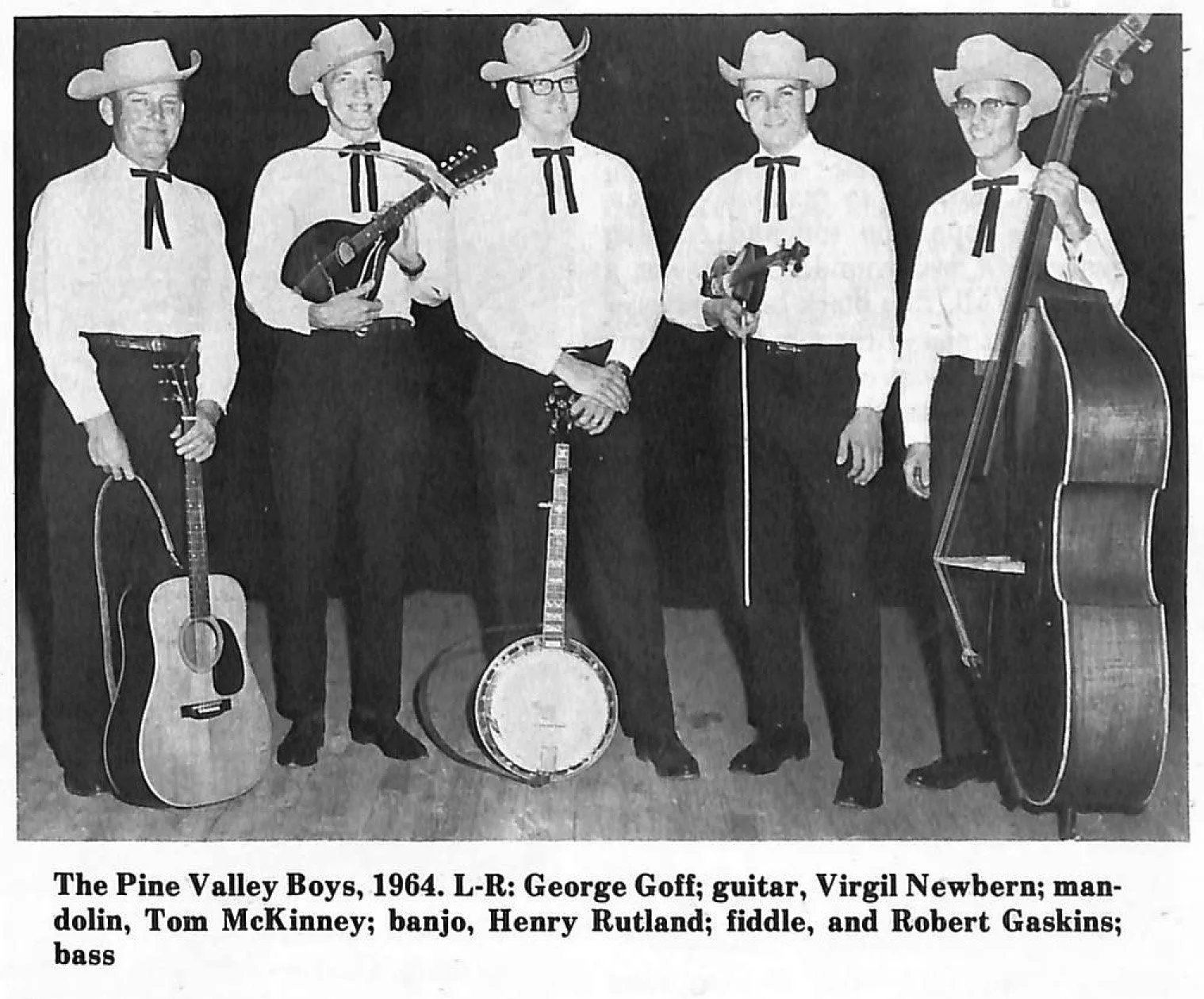
“Henry Rutland and the Pine Valley Boys needed a banjo player and baritone singer. They’d been playing eight years, and the banjo player was working shifts. The next thing I knew, we had a working band with a Saturday morning radio show on WTIF, and I was the booking manager.”
The band, consisting of George Goff, guitar; Virgil Newbern, mandolin; Henry Rutland, fiddle; Robert Gaskins, bass; and Tom, banjo; did Quaker Oats shows all over South Georgia, fronting for Jim and Jesse, Ray Pillow, and Bill Anderson. There were radio spots on WALB in Albany, Georgia, mobile home grand openings, and schoolhouse shows.
“We did a comedy routine, with Henry Rutland in a clown costume, while I played straight man. That’s where I learned Reno and Smiley, Flatt and Scruggs, and Bill Monroe tunes, routines, and baritone singing.
“It went on for a year; I was in college and working with them. We did all gospel shows with the Florida Boys, Hobie Lister, and the Tonemasters, and recorded an extended play 45 rpm, ‘Jumping The Frets,’ ‘All The Good Times Are Past And Gone,’ ‘My Saro Jane,’ and ‘Jesus Needed One More Rosebud’; and one regular 45, ‘Bluegrass Breakdown’ b/w ‘Farewell Blues.’ ” By early 1966, the band had broken up.
Tom bought a TB-1 in Atlanta and a TB-2 in Tampa, and took them to Tut Taylor in Milledgeville, Georgia, for 5-string conversion. In 1965, they went to the Asheville, North Carolina folk festival Tom had attended for several years, and in October of that year, to the DJ convention in Nashville. Tut introduced Tom to Rual Yarbrough, Hershel Sizemore, Bobby Osborne, Bill Emerson, Red Rector, and Bill Monroe.
“I thought Earl was the only one who could play like that until I met all these other people!”
At this time, Tom was working for Zoellner Music Company in Albany, Georgia, selling banjos and guitars and teaching. He appeared periodically on WALB-TV in Albany as a promotion for the music company, also performing for local civic groups, usually with only a guitar backup.
“Baldwin (Piano Company) bought out Ode and came out with the Baldwin banjo. Their first gold-plated D-model, I bought from Zoellner and brought to the Asheville folk festival. That banjo turned heads. It was loud, cracking and ringing, but had not depth. I showed it around and took orders there and at the DJ convention.
“Allen Shelton, Bobby Thompson, and Tut took me to Earl Scruggs house and I got to see Earl’s banjo for the first time. I finally knew what I was looking for.
“Once I saw Earl’s, Curtis McPeake’s, and Paul Champion’s —the first flat-heads I ever saw—I kept buying and trading banjos, looking for the ‘Holy Grail,’ trying to find the sound Earl had. I kept ending up with more banjos. I don’t know why, but I couldn’t sell them.”
Tom moved to Asheville in April, 1967, and applied to Western Carolina University. That summer he won the banjo championship at the Asheville Folk Festival, and in the fall, with “eight or 10 banjos” entered school—but not for long.
“By spring of 1968, I was more and more disgruntled; school kept interfering with my music!”
Traveling with Tut to a few festivals, Tom met Don Humphries, and formed a duo, Don and Tom and Company. They worked four nights a week at a local pizza parlor, and also entered—and often won—contests and championships.
By late summer, 1968, Don and Tom joined with Ralph Lewis, Larry Holcomb, and Gene Dillard to form the Piney Mountain Boys. Tom also worked during this period with E.B. DeBruhl, guitar; Arvil Freeman, fiddle; Carman Freeman, mandolin; and J.V. Griffin, bass; as the Blue Ridge Mountaineers, recording “Little Maggie” and “Scotland” on the Spectrum label.
When Rual Yarbrough left the Boys From Shiloh to work with Bill Monroe and his Blue Grass Boys, he recommended Tom as his replacement.
“Bobby Smith called me in April, 1969. They had a whole summer full of jobs—WSM-TV early morning show, the Wheeling Jamboree —Bobby got me in the union and the whole thing. Charlie Nixon was on Dobro, Bobby on guitar, and Ken Smith played electric bass.”
In June they cut an album—22 cuts—for Rural Rhythm, with Vassar Clements on fiddle. “It took 13 hours to record straight through in Canton, Ohio. I played banjo and sung tenor on that session, and played with the Boys From Shiloh until 1972.
“In 1969 I did, in fact, find my first original 5-string flathead, an RB-4. My first original had been a TB-3, the black one, in the summer of 1968. It had the sound I heard in Earl’s banjo; it was not Earl’s banjo, whose is, but it had that deep growling sound with cracking on top, the underlying humongous tone underneath, like firecrackers going off in a #10 washtub.
“Earl’s banjo is so responsive—sizzling bacon sound on top and echoing underneath, a well-rounded tone, not a dry sound at all. The black banjo always produced that sound for me; it’s the one I’ve recorded almost everything with.
“When I started getting my flatheads in line, I sold all my other banjos. I couldn’t afford to keep those banjos; I needed the money worse, and had two originals by that time.
In the fall of 1970, Tom went to Mussel Shoals to record an album, “Jake Landers and Tom McKinney Present Original Songs and New Banjo Sounds of the ’70’s,” with Vassar Clements on fiddle and Ken Smith on bass, an album which is no longer in print. The following spring, he recorded “Uptown on Five,” on the Tune label, using sound on sound to perform all parts.
“Those were more instrumentals I’d written,” Tom said. “One shining song that came out was ‘Uptown,’ I later recorded with the Shenandoah Cutups.”
In 1972, Tom had appeared in the Walt Disney movie “Chico, the Nashville Coyote,” starring Walter Forbes and featuring numerous bluegrass musicians in cameo roles. This led to a Rip Torn theatrical movie, “Payday,” in 1973, in which Tom and the Boys From Shiloh performed two songs Tom had written for the movie, “Flatland” and “Road To Nashville.”
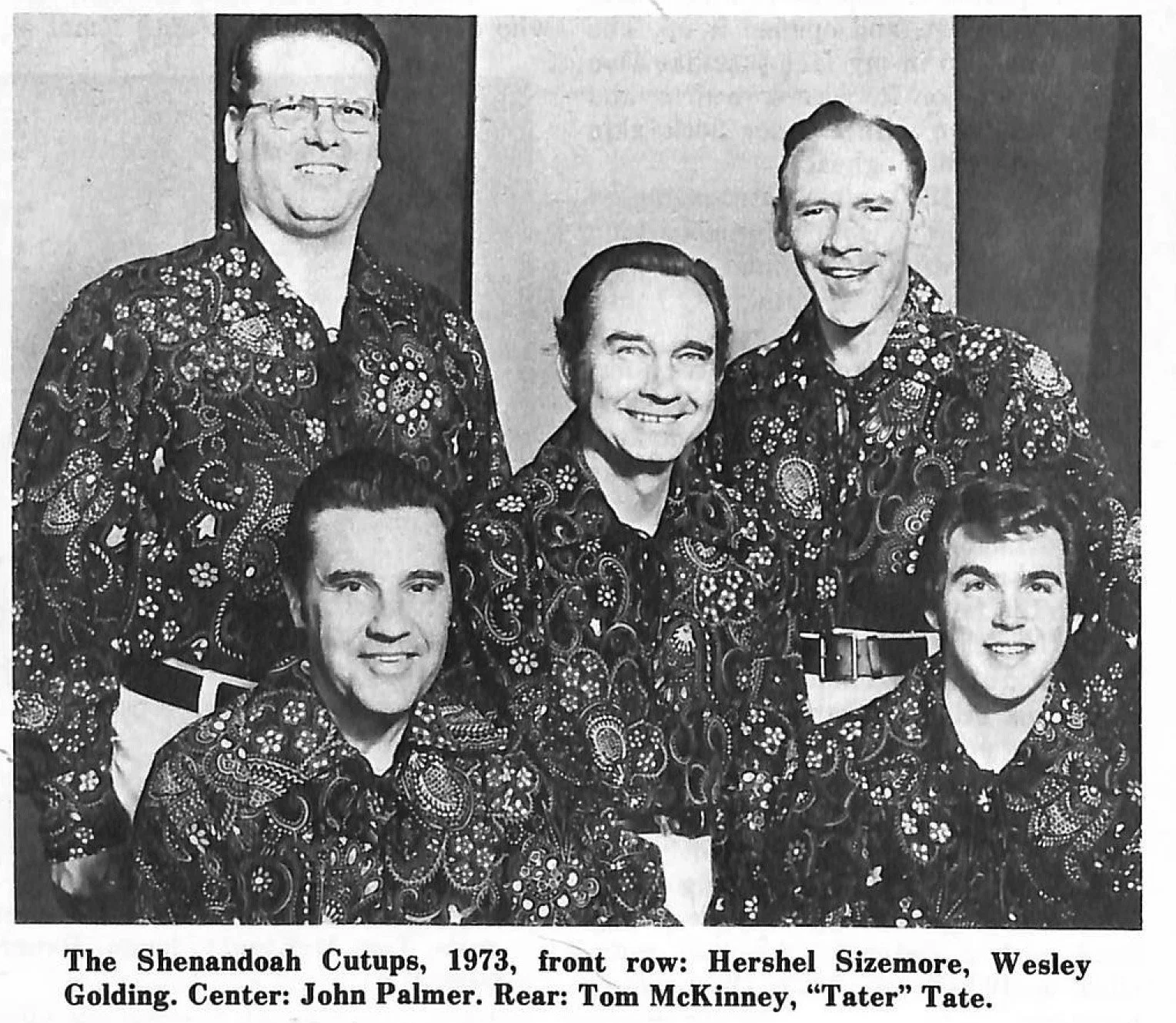
Another album with Bobby Smith and the Boys From Shiloh, “Stop, Look, and Listen,” was recorded in the fall of 1972, just before Tom left the group to join the Shenandoah Cutups,” for Rebel Records.
“I was with those guys and played every major and minor festival east of the Mississippi. They were hot before I joined them, and had had all those jobs for years; I made more money than I ever thought I’d make!
“Those boys taught me more about what a banjo is supposed to do—Hershel Sizemore worked with me about timing, band stance, stage presence, working in and out of the microphone, and how a band works as a unit. He helped me probably more than any other individual. He was professional; his years of experience had to be the key.”
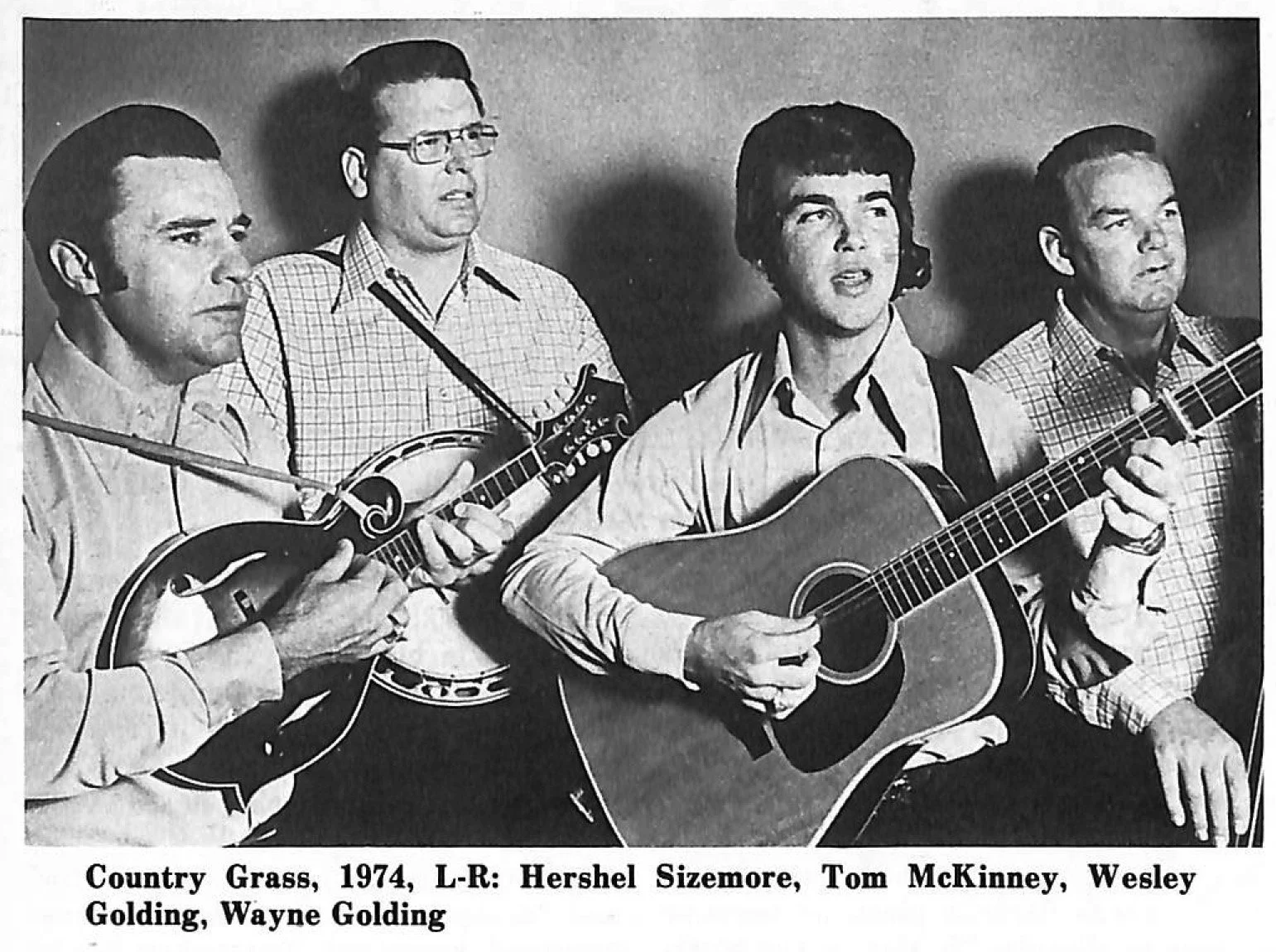
When Billy Edwards returned to the Shenandoah Cutups, Tom left, and not long afterward, Hershel Sizemore called to say he was putting together a band with Wesley Golding and his father, Wayne Golding, and wanted Tom to play banjo.
“From the first note we struck in practice session, it was so tight and right and all the instruments sounded the best I ever heard. The Shenandoah Cutups were supercharged and hard to keep up with, but Country Grass was magic.
“By 1974 we had quite a lineup of bookings. Hershel wouldn’t play bars and clubs if he could help it. We cut “Livin’ Free” for Rebel in the summer of '74, and everywhere we went, it seemed we encored more than we didn’t.
“It didn't take long for people to see we were determined; the stuff we recorded on the album I thought were pace setters—we’d go to a festival and see people doing our material.
“The stuff Wesley was writing was modern and fit with the times. Young people liked it—it was the theme of what was going on and putting it with good driving bluegrass rhythm. Boy! what an exciting group and an exciting time. We were rehearsing for our second album for Rebel, with new material and songs, when, unbeknownest to me, in December 1974, the band broke up. I couldn’t believe it, but it wasn’t my partnership.
“Hershel and I got A.L. Wood and his son and played as the Country Grass from January of 1975, but the same old magic wasn’t there. A.L. Wood is one of the dandiest fellows I ever worked with, but he’s a banjo player. (Wood played guitar with the group.) Somehow it was not the same, and through frustration and a lack of jobs I made the decision to come home in April of ’75.
“I was already set up here (Asheville, North Carolina) to teach banjo with Dunham’s Music House, and had 35-40 students 4 or 5 days a week. It was steady income, and I enjoyed the regular hours and being home every night. I played with a few groups from time to time, helping out.
“In the summer of 1975, I recorded “There Is A Time,” using sound on sound and singing 3-part harmony with myself; it was in the can, waiting to be released, and finally came out in 1979.
“Ralph Lewis came home off the road after playing with Bill Monroe, and asked me to sit in on a session, with Arvil Freeman and Ralph’s boys Marty and Don Lewis; he asked me to pick with them in the fall of 1977. Teaching and picking with Ralph, I was making more money here in town than I ever did on the road. I did go to Bean Blossom, Hendersonville, and Winston-Salem, and hung in there with him until 1980.
“I was tired of travel; I found out I had diabetes and it was a health problem, I lost 36 pounds. “Meantime Hershel asked me to record his mandolin album, “Bounce way,” on County, with Del McCoury on guitar, Sonny Miller on fiddle, and John Palmer on bass.
“Hershel could have called any number of banjo players, but he called me; that was the most flattering thing I’ve ever had come down the pike. I thought Hershel, from the first time I ever saw him, was the epitome of professionalism. He and Rual both took me under their wing. I doubt if I’d ever have done what I did without them.”
During the recording session, Tom discussed his “in the can” album with John Palmer, and it appeared in 1979 as “There is a Time,” on Palmer’s Gras- sound label, with a jacket Tom designed.
Shortly thereafter, he helped Red Rector record his “Back Home In Madison County” album for Revonah, which he remembers as “one of the most comfortable sessions ever.”
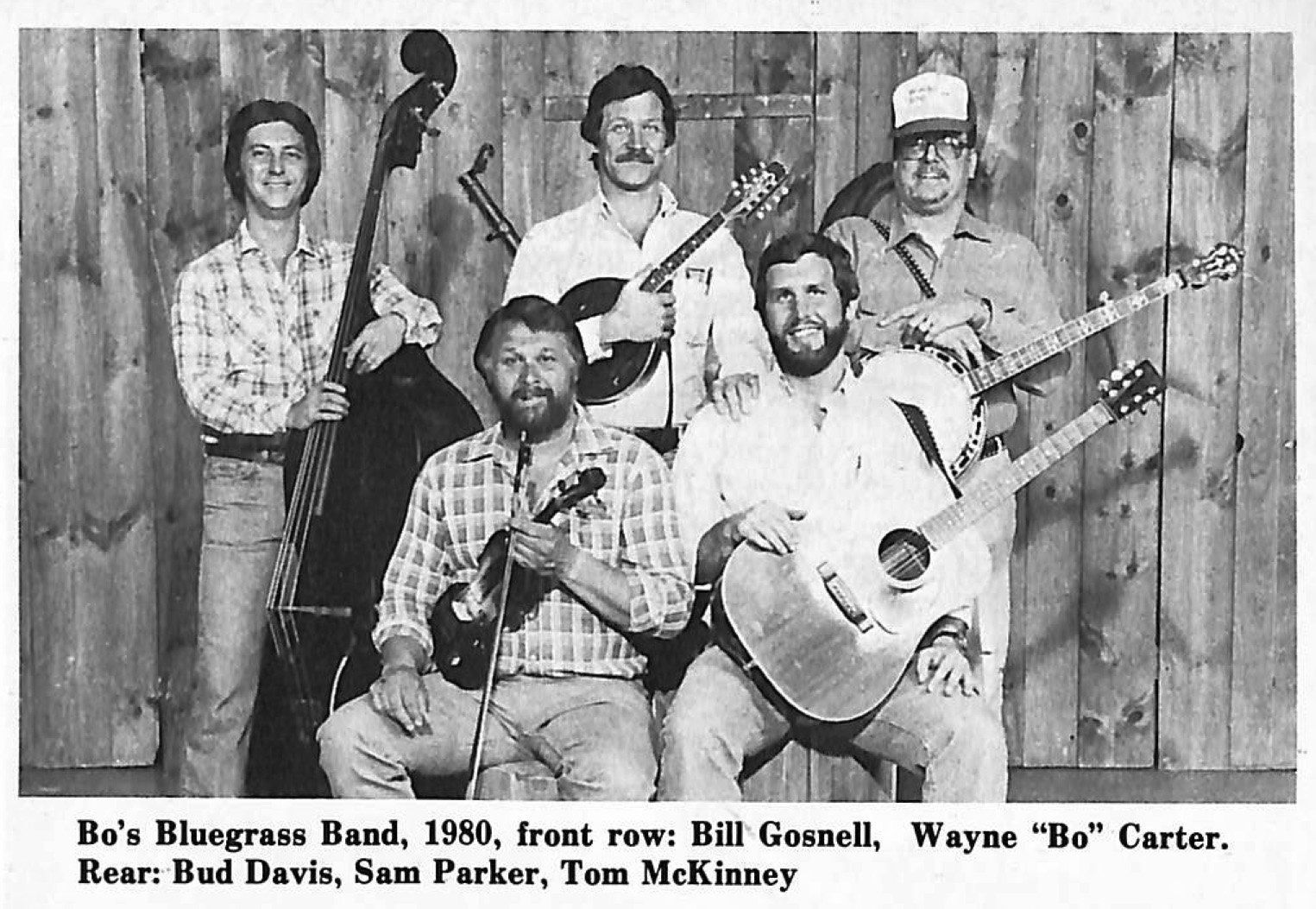
In May of 1980, Tom left Ralph Lewis, to continue teaching banjo from his home, and in July, 1980, began performing in the Asheville area with Bo’s Bluegrass band. Wayne “Bo” Carter played guitar, Sam Parker mandolin. Bud Davis bass, and Bill Gosnell fiddle. This lasted until October, 1985, and the group recorded one album, “Take Me Back To Tulsa,” on the Skyline label, which appeared in 1983.
He is currently playing with Marc Keller and Southern Connection, with Marc on guitar, Calvin Parham on bass, and Jan Johannsen, recently arrived from Sweden, on fiddle.
Preferring teaching, local appearances, and an occasional recording session to life on the road, Tom has carved out a niche for himself in the Asheville area, where he also does a thriving mail-order business in the stainless-steel capo he designed in the late 1960s. Currently including a guitar capo and two types of banjo capos, Kinman capos are made to fit individual necks.
After studying designs and metals, and following discussions with J.D. Crowe and Sonny Osborne, Tom came up with a prototype banjo capo.
“I gave it to Sonny and asked for a critique. He said it was too bulky, so I started trying a different swing bar and latch. I ran up on a guy with access to computerized machinery—he’s now a silent partner—and we got it refined.” Sonny and J.D. approved of it, and now use it themselves, as do many lesser- known banjo players around the world.
Although he’s never been a trader, Tom has owned and sold some fine instruments; just as another man might drive a car for a few years, then try a different model, Tom will keep a banjo for a while, then sell it to someone else who appreciates it, and buy another one.
Perhaps the best known of Tom’s former banjos is the RB-Granada he sold to Sonny Osborne, an original 5-string flat-head he bought in 1971, that Sonny plays in performance today.
That banjo was in mint condition, but some banjos Tom has rescued, like the Granada flathead plectrum he came across in Florida. “It was in the worst condition,” he said. “The resonator was painted black, and it had sat on a man’s dirt floor in his garage for 20 years. It had a 1-piece 6-style flange, and a Granada tension ring. I had it restored, with a 5-string curly maple hearts and flowers neck, and sold it to Winn Osborne about 1979 or 80.”
Tom, mystified by the “collector” and “dealer” reputations he has never deserved, keeps only two banjos for his own use, the black RB-3 he’s owned since 1968 and a converted RB-100 he calls his “beach banjo.”
“A man ought to have two banjos, in case something happens to one of them,” Tom said.
That’s hardly collecting, or dealing. In nearly 25 years of playing, Tom has owned only eight original flat head banjos: five Granadas, 2 RB-3’s, and one RB-4. ‘I’ve paid dearly for all of them except the four and the Granada out of West Palm Beach; that one was a fair price, but not a steal. The RB-4 I traded for, and the black 3 was a fair market price for 1968.”
George Gruhn has told people that Tom is one of the nation’s Gibson banjo experts, and he is frequently consulted by people who want to authenticate a banjo.
‘I’ve studied banjos, and don’t think I could be fooled,” Tom said, “and I can tell you, just because you own an original flathead banjo doesn’t make that one a good one. A banjo that’s meticulously put together from the right ingredients can sound better than an original.”
And a final caution: “The picker makes the banjo.”
Tom McKinney should know: he’s not a dealer, not a collector. He’s a picker.