
Charlie Sizemore — A Lonesome Voice From The Hills
By Paul Morris
Reprinted from Bluegrass Unlimited Magazine
May 1986, Volume 20, Number 11
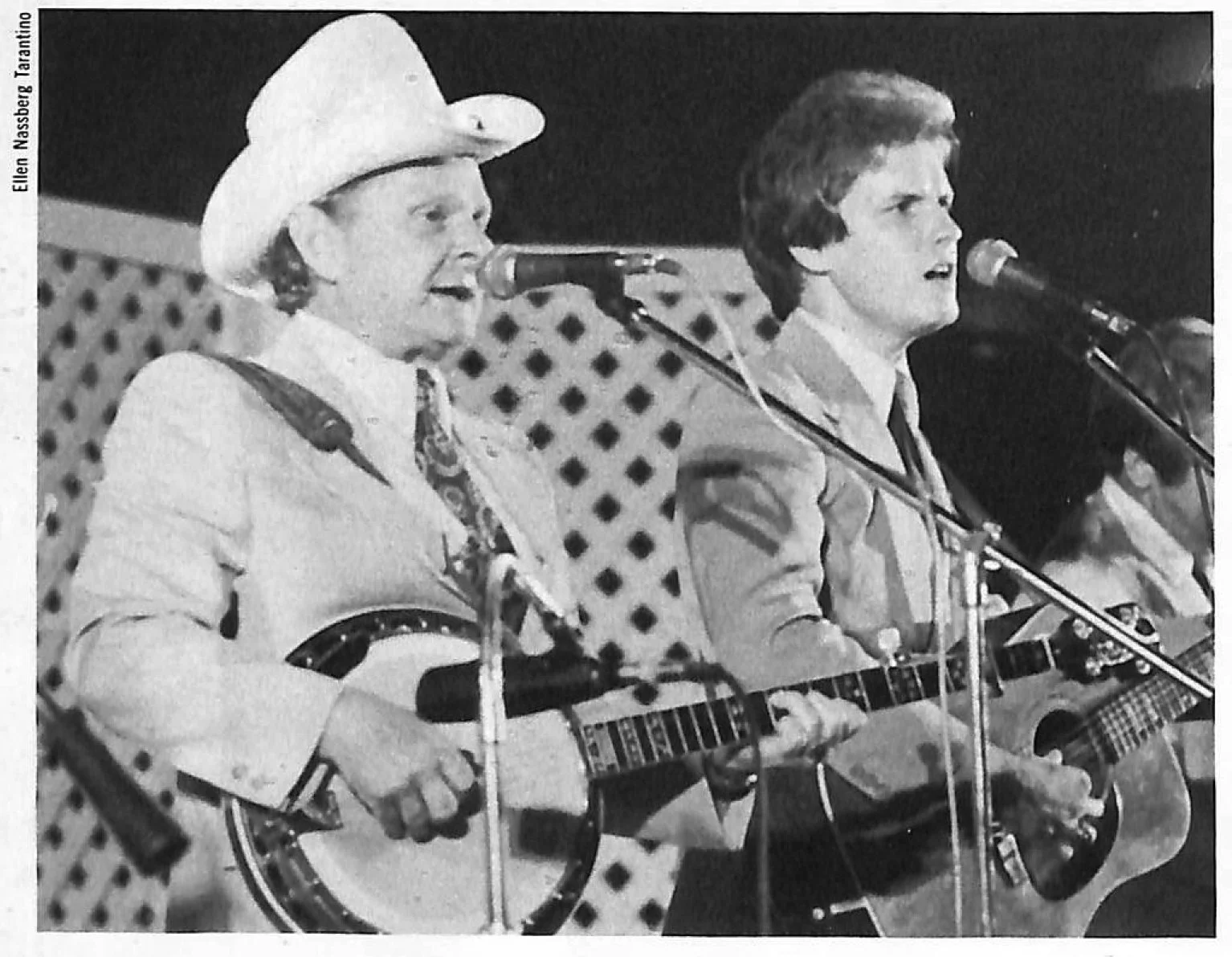
For the past eight years, the lonesome voice beside Ralph Stanley has been that of a fine young singer and musician named Charlie Sizemore. He is just 25 years old, but has already been a professional musician for a third of his lifetime.
Born November 23, 1960, on Puncheon Creek in Magoffin County, Kentucky, Charlie cannot remember a time when there was not music in the house. His father, Henry Sizemore, is both a bluegrass and old-time banjo player and was an ardent fan of the original Stanley Brothers. Charlie’s first musical remembrance was hearing the Stanley Brothers and it seems he learned some of the songs almost by the time he could talk.
Charlie’s first choice of musical instruments was the fiddle, at the age of six years. “I still love the fiddle and sometimes really wish that I had followed through with it,” was Charlie’s comment on this phase of his musical life. “When a person is that young, they sometimes lose interest... I did ... but I would rather be a good fiddle player than anything. I really love to hear a good fiddle player. But I have never tried much fiddle since then, and I think it’s a little too late now for me to start to learn.” The next time Charlie became interested enough in music to try to learn to play an instrument was when he was twelve. At that time, he became interested in both guitar and banjo through his Dad, who was playing music with a local group around Salyersville, Kentucky. The group, known as Lum Patton and the Half Mountain Boys, was heavily influenced by Ralph Stanley. Charlie later joined the group himself, and remained with them for three years.
“There was always a guitar and a banjo laying around the house, so I just started picking them up and trying to play some,” was Charlie’s explanation of how he learned to play music. He was more fortunate than most in his beginning instruments, because he recalls that his Dad had a Martin guitar and a Gibson banjo.
Four short years later, Charlie was a professional musician, playing lead guitar with Melvin and Ray, the Goins Brothers. At sixteen, during his junior year in high school, Charlie got a call from Melvin asking if he would fill in for Ray on a matinee show. Charlie agreed, and played banjo on that show. The following summer, 1977, he was offered a job with the Goins Brothers for the festival season as lead guitar player. He played that season, and remembers enjoying it very much.
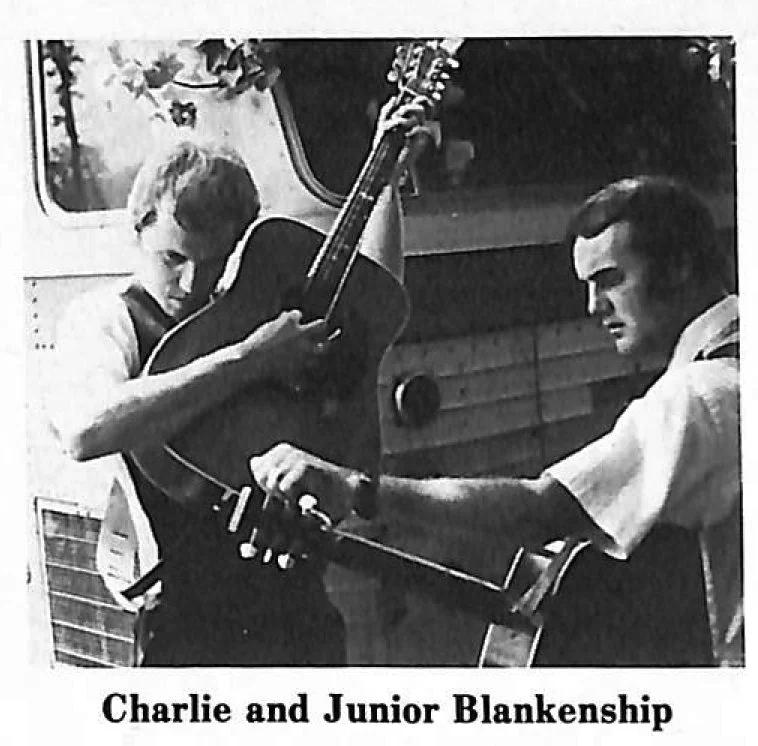
He didn’t sing much during his stay with the Goins Brothers—only a few solos that Charlie remembered, “Melvin practically forced me to do. I’m glad that he did, because I didn’t have much confidence in my singing ability back then. It really helped to have someone pushing me at the right time.”
Although Charlie didn’t have much faith in his singing ability at that time, it couldn’t have been too bad, because Ralph Stanley heard him at a show in Greenfield, Indiana, and offered him a job on November 19, 1977. Ten days later, he played his first show date as lead singer and rhythm guitar player in the Clinch Mountain Boys group. Charlie says, “I never had to learn a Stanley Brothers song. I already knew them all because Dad was such a great Stanley Brothers fan, and so was I.”
About the same time Charlie started to become really interested in music, it seems a coincidence that two other young Eastern Kentucky boys were performing with Ralph Stanley —Ricky Skaggs and Keith Whitley. Charlie recalls that he really liked their first record, both on their own and as a part of the Clinch Mountain Boys. At that time, he had no inkling that he would one day follow Keith Whitley as Ralph’s lead singer and rhythm guitarist.
Finding time and having the determination to finish high school during those hectic days was quite a chore for a seventeen-year-old mountain boy, —but Charlie Sizemore came through with flying colors, which reflects another side of this remarkable young man. He was an excellent high school student, and graduated in three and a half years with only 3 B’s—all the other grades were A’s. Again, in his high school work as in his music, Charlie was encouraged by his father, Henry, who holds a Masters degree in History and Political Science, and his mother, Mildred, who is a licensed midwife and a nurse practitioner. Still, it is no small accomplishment to compile such an excellent high school record and play bluegrass music professionally.
Being such a good student, one wonders if Charlie might have had thoughts of careers in fields other than music. Charlie comments on this by saying, “The music thing sort of happened to me. It kinda crept up on me. I never had much choice in the matter, it seems. Actually, I never had it in mind to play music for a living... not that I had anything else in mind. I just never had time during high school to really decide what I wanted to do with my life.”
So, at 17, Charlie Sizemore took over a job that had been held by Carter Stanley, Larry Sparks, Roy Lee Centers and Keith Whitley ... an awesome task, at best. Again, Charlie feels that his singing at that time left something to be desired, at least in his own mind. Again, he received encouragement from one of the masters, this time from Ralph Stanley. Concerning those early days with Ralph, Charlie notes, “He never said anything to discourage me. He encouraged me in every way he could. Nobody has ever done more for me than Ralph Stanley. Ralph’s been so good to me that I’ll always be terribly indebted to him. He took just a little teen-aged boy from Salyersville and gave him every opportunity in the world. So I’ll never take my job with Ralph for granted. I’ll always appreciate the job I’ve got.”
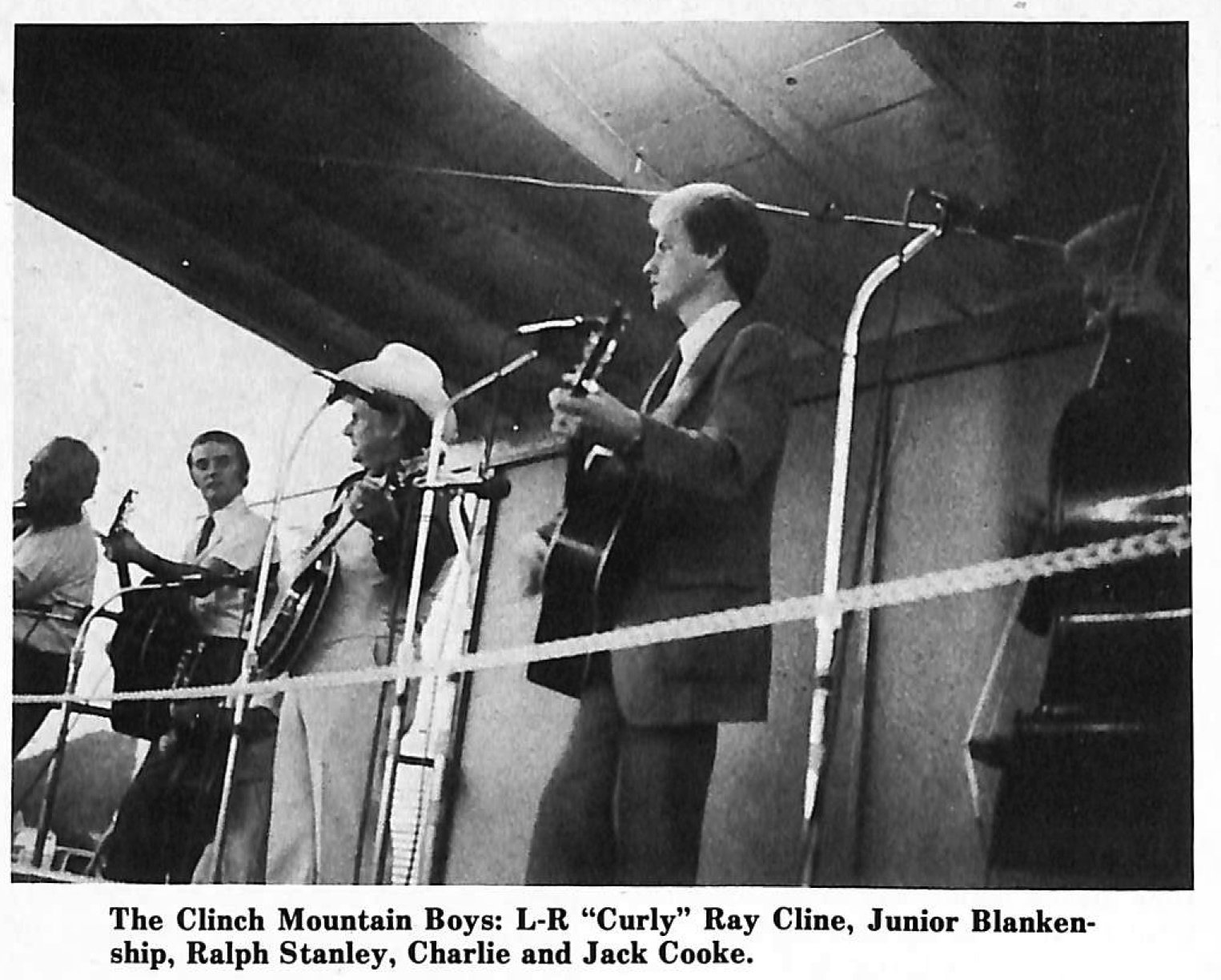
That Charlie is working hard to affirm Ralph Stanley’s confidence in him can readily be seen by watching one of their shows or listening to their records. Charlie’s singing and guitar playing are a perfect counterpoint for Ralph’s voice and banjo. “I want every Ralph Stanley show and every Ralph Stanley record to be as good as it possibly can,” Charlie emphasizes. “When the show is done, or the record is made, I want to know that I have always done my part to the best of my ability. Certainly I take my work seriously. There’s a lot of fine musicians out there that could do as good a job or better than I do that would really like to work for Ralph, so I always want to do the best I possibly can. Anything less would not be fair to Ralph.”
Those are serious words for a man as young as Charlie Sizemore, but the conviction in his voice rings so true that one does not doubt his sincerity. He is totally dedicated to his music.
Ralph Stanley holds Charlie in high esteem. “He just suits me,” was Ralph’s reply when questioned about Charlie. “He is a very agreeable young man and easy to get along with. He works fine in a band situation and all the Clinch Mountain Boys like him and like to work with him. He is one of the most dependable people I have ever worked with. He always shows up and he’s always on time. In my opinion, he is a great lead singer and musician,” Ralph sums up his opinion of Charlie with a simple but eloquent statement, “He’s number one in my book.”
Another major change took place in Charlie Sizemore’s life on December 17, 1983. At that time he married Robin Tackett of Flatwoods, Kentucky; a lovely girl with considerable musical abilities. She has recorded two excellent bluegrass albums and makes personal appearances with her own group, billed as the Robin Tackett Show. Robin plays guitar and sings in a clear voice that causes Charlie to remark, “She’s a better singer than I am and has the possibility of a great future in music.”
Robin’s favorite music is gospel, and she sings a good deal in churches in Eastern Kentucky. She is a devout Christian, and usually makes a short testimony of her faith during her musical performances.
Charlie and Robin had known each other about seven years before their marriage, meeting through the musical medium that they both love —bluegrass. They now live near Salyersville, Kentucky, and both continue to play and sing, though in different bands. They are forced to be apart a good deal because of this, but both of them understand the fact that being on the road is a necessity for a successful musician.
I talked with Robin back stage at the Kingscreek Bluegrass Festival in Letcher County, on one of the rare occasions when she and Charlie were booked on the same show, and found her personality to be equal to her beauty. She is understandably enthusiastic about Charlie and his music, and encourages him to be the best musician possible. They sing together at home quite often and she feels that their music compliments each other ... her’s a little more modern and his more traditional.
Charlie spent one night of this same festival at my home, replying to questions and helping me with background for this story. I had known him musically during his entire career with Ralph Stanley, but this was my first opportunity to learn more about him personally. Charlie Sizemore is a very unique individual, and somewhat of a paradox.
He is young, but as old as time when it comes to being serious about his music. He has no hobbies, other than a love of reading historical novels and non-fiction, and playing banjo for his own enjoyment. He says he is not good enough on banjo to play on stage, yet on Curly Ray Cline’s new album, “Smarter Than The Average Idiot,” he turns in a very commendable performance on several cuts. The same album demonstrates that despite his serious bent, Charlie can have his lighter moments and join in the fun. He also has a good sense of humor in a conversation. He is not satisfied with his singing, but everybody else is, including Ralph Stanley. He claims to be just an old mountain boy, yet he is highly intelligent, has good manners and is very personable.
What are my conclusions about Charlie Sizemore? First, I like him very much as a person, as you will, if you are fortunate enough to make his acquaintance. Second, he is a powerful lead singer, and getting better with every performance. Third, as I told his wife Robin, I don’t think, as yet, he knows how good a singer and musician he really is. If he ever finds out, he could stand the bluegrass music world on its ear.