
Jimmy Driftwood and The Rackensack Players: Proof That Ozark Culture Still Lives
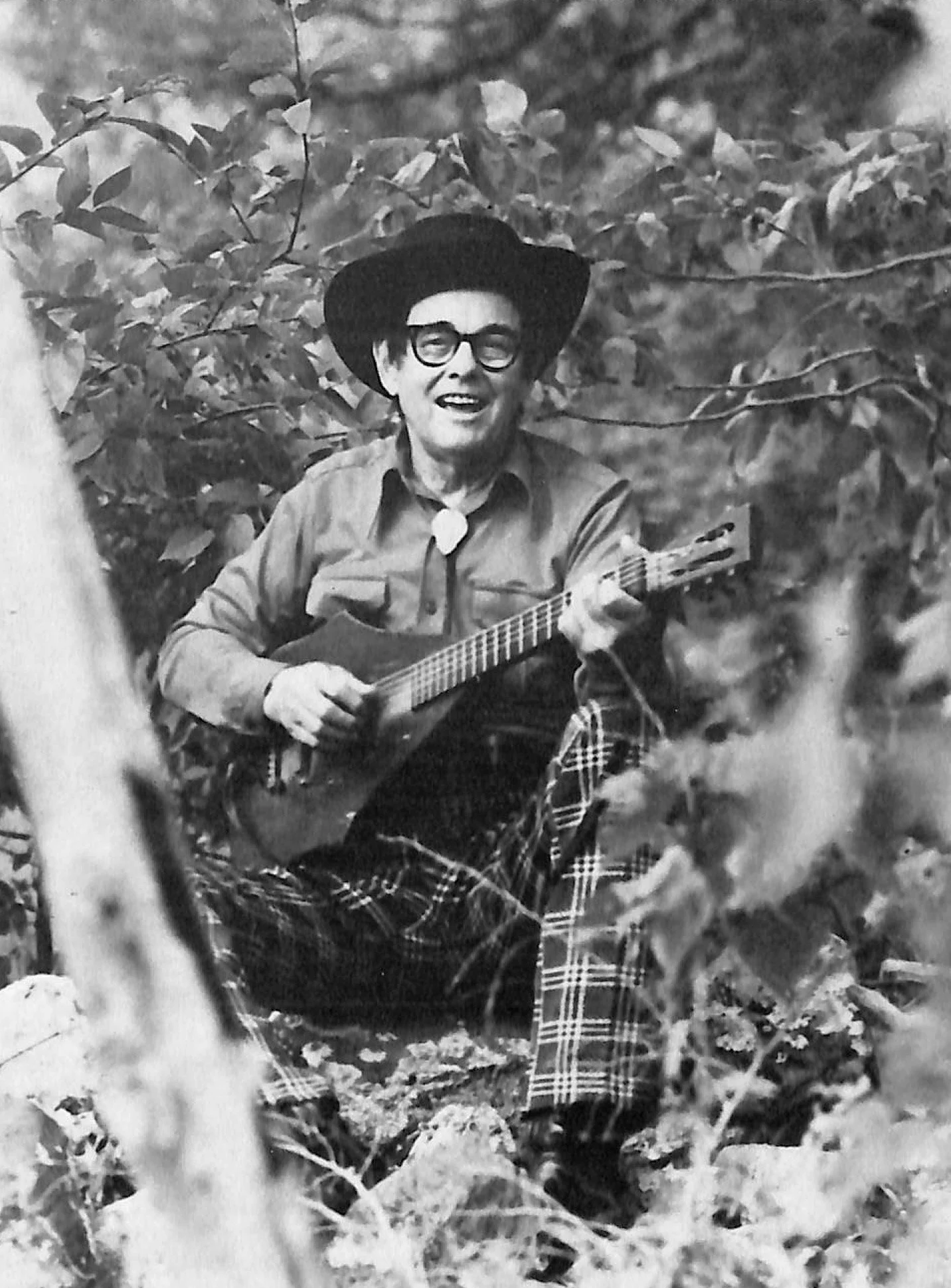
By Larry Rhodes
Reprinted from Bluegrass Unlimited Magazine
November 1978, Volume 13, Number 5
Until fairly recently, Stone County, Arkansas, has been very remote. Song writer and folk singer Jimmy Driftwood, a former Stone County school teacher, admits that. The area didn’t have its first blacktop road until the 1940’s.
Yet, somewhere in one of those old one-room schools that Driftwood taught in before finding fame in song writing must have been a book containing that old proverb about Mohammad and the mountain. If there’s anyone who truly goes out and finds what won’t come to him, it’s Driftwood.
Back in 1963, Driftwood launched plans to fulfill a dream to acquaint the outside world with the music and culture of the Ozarks. He helped organize the Arkansas Folk Festival and acquire federal funds for the Ozark Folk Center in the tiny town of Mountain View near the even tinier Timbo where he lives. Yet, differences of opinion between Driftwood and those with whom he worked cost him his job as music director at the Center. Still, he wouldn’t give up.
“After I was fired, I thought for a while and decided that, just as I had been trying to get the rest of the world to come to Mountain View to learn about our culture, I’d start taking our culture to the rest of the world. That's when we decided to go on the road.”
The “we” Driftwood referred to is a group of authentic Ozark folk musicians known as the Rackensack Folklore Society. Although they don’t work for free, the troupers aren’t professional performers in the customary sense of the word.
In fact, some of them hadn’t played in years until Driftwood helped renew their interest in playing music when he organized the first Arkansas Folk Festival. Driftwood said the festival, along with the Ozark Folk Center in Mountain View, began partly as an attempt to pump more money into an area where farming was declining and industrial progress was slow.
Driftwood was booking some 60 musicians, and in his words, “everyone way making a little money.” When he left the Ozark Folk Center, he carried his friends in the Rackensack Folk Society to a rented movie theatre in Mountain View where they performed on weekends. According to Driftwood, the remaining players at the Center “could get to play more often and make more money.”
Not to be defeated, Driftwood set about organizing a booking agency with the help of Florida booking agent Bill Fegan. Driftwood said the agency, with 60 acts, is the biggest in Arkansas. At age 70, Driftwood is booked both as a single act and with the Rackensack group. In spite of the fact that his famous RCA records are no longer available, his fame as a composer and performer of such songs as “Battle Of New Orleans” and “Tennessee Stud” keeps him busy with the college crowd.
While the Rackensack group is one of the major packages for the agency, known as Ozark Attractions, the firm by no means caters exclusively to folk music. Perhaps it’s a holdover from his school teaching days in a remote section of the Ozarks, but Driftwood’s agency mainly books cultural, non-commercial acts. The agency handles such groups as The Dallas Theatre, The New York Harp Ensemble and The Jack Daniels Cornet Band.
The agency gets a lot of business by selling concert series to towns that are otherwise too small to offer much cultural entertainment. An example is Cherokee Village, a retirement town in Arkansas which bought and sold tickets to a concert series booked through Ozark Attractions.
Working with the Rackensack group through an agency like Ozark Attractions is probably a much different life than Driftwood would have been leading had he not left the Nashville music scene several years ago where he was a member of the Grand Ole Opry cast and an RCA recording artist.
Unlike other performers who left Nashville, Driftwood has no complaints about Music City. In spite of the fact that his simple style hit the airwaves when modern country was making rapid popularity gains, Driftwood made money for some of the Nashville executives. At one time, Driftwood even toured with Johnny Horton, whose cover of “Battle Of New Orleans” outsold his.
Yet, Driftwood feels he’s done more good by centering his career near his home than if he’d stayed in Nashville. He’s dedicated to keeping his heritage alive, and that’s why he works with the Rackensack performers.
“We wanted the Rackensack Folk Society not only to preserve our heritage but to keep it alive,” Driftwood said while sitting in the den of his Arkansas ranch house. “There is a difference. You can preserve peaches in a jar and set ’em up, and they’ll last forever. But, that’s not like going out and planting a tree so you’ll keep on having peaches.”
As an indication that he practices his preaching, the Rackensack group Driftwood has assembled includes an eight- year-old as well as some even older than the 70-year-old picker himself.
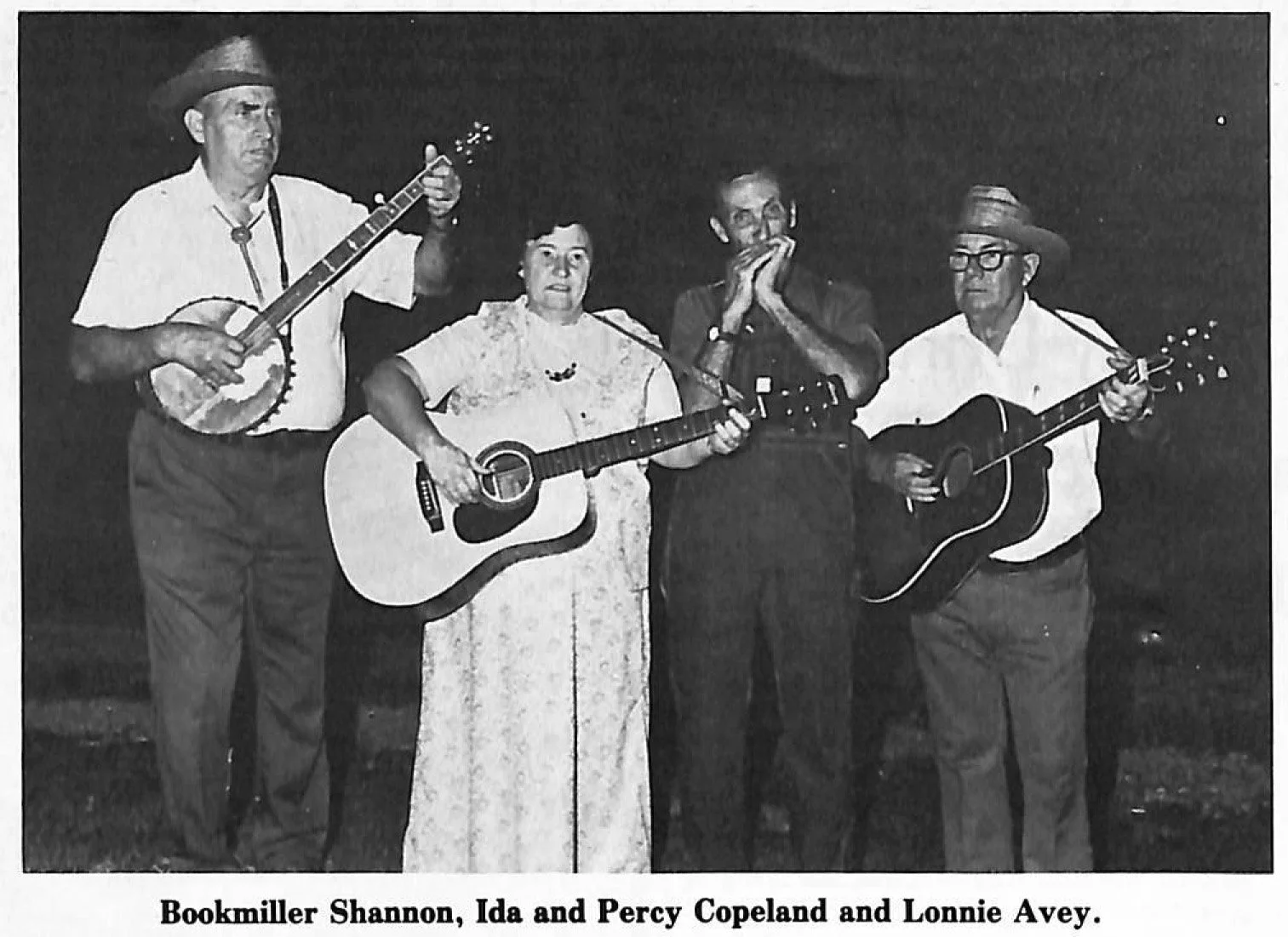
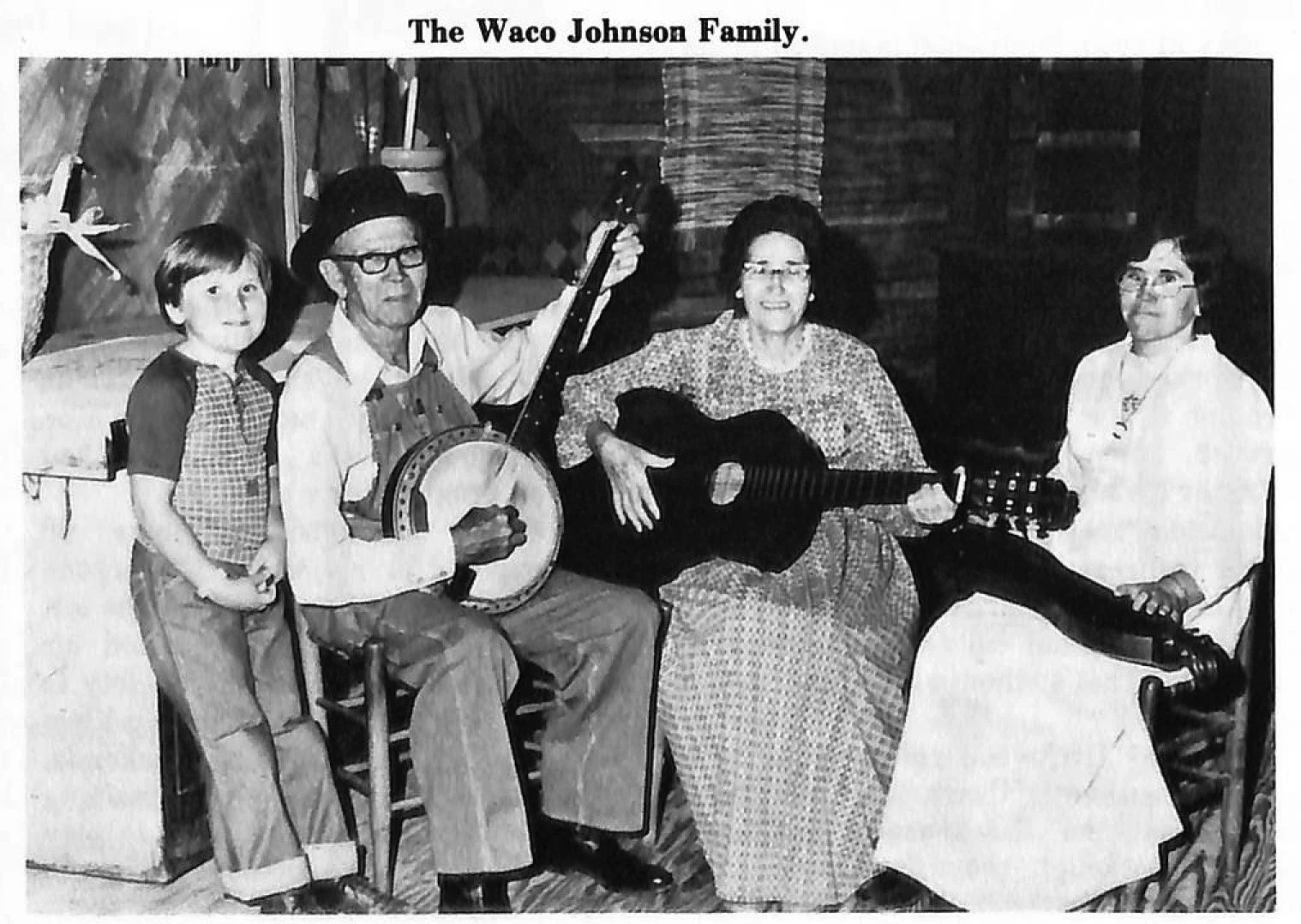
The group represents an almost total composite of Ozark culture. There are ballad singers, fiddlers, banjo frailers, buck-and-wing dancers and dulcimer players. True to mountain music tradition, the troupe contains several family acts.
“We set up the craft exhibits and demonstrations in the lobby of wherever we play,” Driftwood said. “Spectators can watch the members of the group work during the day, and then we give a concert at night. The craftsmen don’t try to sell their wares, but if someone asks, the members of the group will sell their goods.’
The reason Driftwood’s home country is so rich in folk talent is based in history, he said. He thinks the fact that Arkansas was a stop-off for people who were traveling from Kentucky and Tennessee to California plus isolationism had a positive impact on the area’s cultural heritage
“When people came out of Kentucky and Tennessee on their way to California, many of them stopped here partly because the hills of the Ozark Mountains kinda reminded them of home,” Driftwood said. “Besides, in a way they were barred from going on to California because Oklahoma was considered the badlands and was full of outlaws.
“The only ones of that group who ever got away from here were a few of the men who would go west and be cowboys a while. That enriched our part of the country because those guys came back with cowboy songs. The people here already had songs that had been brought from Tennessee, Kentucky and North Carolina. This all made our area very rich in folk songs. Isolation has helped keep folk music in this country.”
But once paved roads and indoor plumbing started coming to Mountain View, the innocence of the music began to erode. Driftwood said this is why he had difficulty organizing both the Rackensack Folk Society and the first Arkansas Folk Festival.
“Our people had begun to hear amplified music and other kinds of songs, and they just didn’t think theirs was needed anymore,” Driftwood said. “The people don’t feel that way anymore, but it took time to change them. I think traveling and doing all these college concerts has helped change the group’s attitude a lot, but let’s also go back to 1963 and give credit to the young folks in college for the renaissance in folk music.
That awakening didn’t come in the country. It came out of the big cities. People came down here from the University of Chicago and other places looking for roots. Although a lot of the people around here at first thought those folks looked like hippies, they aren’t afraid of them anymore because they know those people are interested in what our people know. There’s just one thing that I can’t get our people to do anymore, and that’s sit around and tell ghost stories. Someone has convinced them that those things are just superstition and told them people used to tell those tales because they believed them.”
But don’t be surprised if Driftwood doesn’t have a few of the younger Rackensack members telling the ghost tales of their ancestors before long. He’s not kidding when he says he wants to keep Arkansas culture alive. By his standards, merely writing down those tales would only preserve them…not keep them alive.