
James King—Bringing in some new old songs…
By Janice Brown McDonald
Reprinted from Bluegrass Unlimited Magazine
September 1994, Volume 29, Number 3
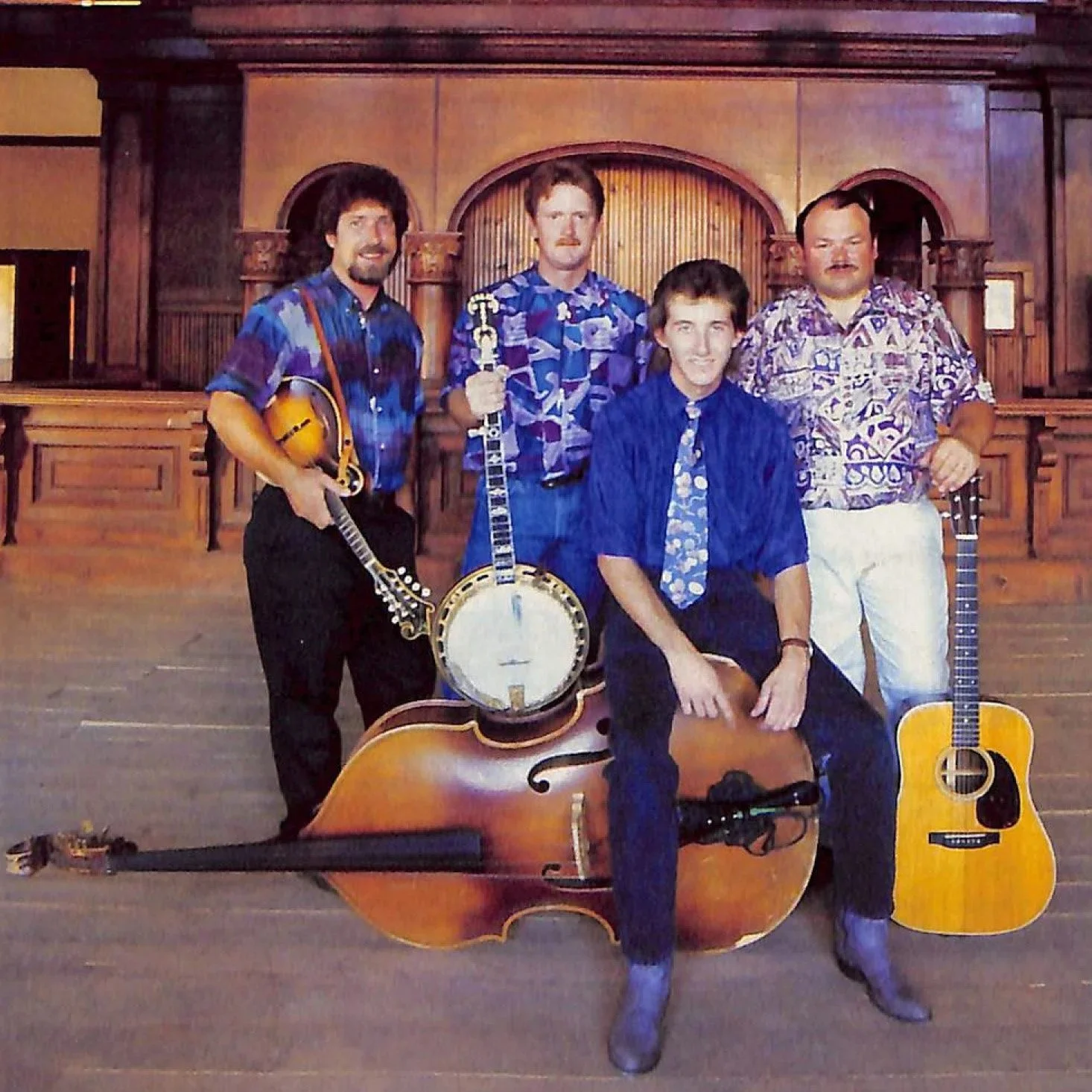
It’s amazing, the interest a little CD can generate,” James King admitted recently over the recent success of his latest CD, “These Old Pictures,” (see BU, May 1994) which resulted in launching him into “overnight” bluegrass stardom after a 15 year career in the field. He has a keen understanding of just why the CD has received such widespread critical acclaim, and he solely credits the songwriting, humbly discounting his own, these days, and a uniquely traditional style of bluegrass picking and singing.
“Ken Irwin, my producer, picked out material for the CD that he thought would be old, but new to this generation. It’s music the public is kind of starving to listen to, and people are ranting and raving about it, and all it is just stuff from years ago that people haven’t heard yet.” He explained, adding that the song, “Tear Drop On A Rose” was written by Hank Williams, which reminded him that he believes Carter Stanley to be the “Hank Williams” of bluegrass music.
“Think of the songs Hank wrote for country music, and then think of the songs Carter wrote, they were the same. Songs like ‘Don’t Cheat In Our Home Town,’ ‘White Dove’...go on down the line, and then look back at Hank’s songs, they were the same type of feeling in a song.”
Former Johnson Mountain Boys singer, Dudley Connell, did most of the tenor work on the CD, and stated he really enjoyed it.
“James is one of the hardest, most lonesome singers I know, and that’s the only way I can think of to describe it. He sings hard, and he really pushed me when we did the sessions. He drew a lot out of me that I didn’t know was there, and it was exciting to do the recording. There wasn’t a lot of time to prepare, and we sang from the heart. Sometimes I think it’s really best that way. You can work too hard and it loses its feel,” Connell said, adding that “I really love James’ singing.”
Carl Goldstein, of Wilmington, Del., who is a member of the Board of Directors of the Brandywine Friends of Old Time Music, describes King as “one of those people with a powerful voice, reminiscent of the Stanley sound, a cross between old-time music and bluegrass.” He added that King’s music is similar to that music familiar to the Galax area which is so old it precedes bluegrass. He describes “These Old Pictures” as an especially “soulful” CD, adding that the material selected is “wonderful.”
James said that although it was his good friend Malcom Pulley of Brandermill, Va., who wrote the hit song from his current CD “These Old Pictures,” James himself has written five of the songs on his “Cold Cold World” CD for Webco/Pinecastle. He said two other CDs on the Rounder label will be released within the next three years.
King, oddly, a bowling enthusiast (he’s happy with his 185 average), was born in Henry County, Va., raised in Carroll, and now lives in Amelia. He began playing bluegrass as a young man of 16, having always grown up around it. His father, Jim King, had a band in the early 60s with his brother, Joe Edd King, who had played with the late Ted Lundy of the Southern Mountain Boys, a legendary band hailing from the Wilmington, Del. area.
King stated that it has “never even crossed my mind” to play any other music than bluegrass, and that the Stanley Brothers influenced him most, musically. His first album was recorded with Ralph Stanley in 1985, on the Wango label, entitled “Stanley Brothers Classics, With Ralph Stanley And The Clinch Mountain Boys, And Introducing James King.” Special guest fiddler Eddie Stubbs, of the Johnson Mountain Boys, played fiddle on that album.
His second album “Reunion—With Ralph Stanley Featuring George Shuffler And James King,” on the Wango label is one he most cherishes. He considers it an experience where he “played between two great ones,” and described it as a sentimental reunion. It was the first time George Shuffler had recorded with Ralph in 20 years.
“And it was sentimental,” King said. “At one point Ralph was sitting there and said, ‘Boys, I’m gonna tell you, the Stanley sound wouldn’t be if it wasn’t for that fellow right there,’ and he pointed at George. George said, ‘Well, let me kiss you,’ and he got right up and kissed him right there, and it was emotional, it was a sentimental moment.
It was really something, I’ll tell you.” He stated nostalgically that when he, Ralph, and George sang “A Life Of Sorrow” as a trio all the way through, that it was so moving “it gave me chill bumps.”
Ralph Stanley also recalled the “Reunion” album session fondly, stating that he believed it was an excellent album, and that he particularly enjoyed King’s singing. “James King is a great singer, he’s real good. I’ll tell you,” Ralph said, “...and I enjoyed working and singing with him, especially the singing.” He added that it had been a sentimental reunion making the album.
George Shuffler commented that King is a “good ol’ boy who sings a whole lot like Carter, more like Carter than anybody else you can think of, I believe, and he sure likes the old Stanley stuff and knows how to sing it. He’s been with us on the reunions with me and Ralph, and everybody always comments on the ‘Reunion’ album we did, and seems to think it was a pretty good cut.” Shuffler noted that there are more reunion performances with he and Ralph and King already slated in the near future, and that these performances seem to be well- received and “quite popular” with the listening public.
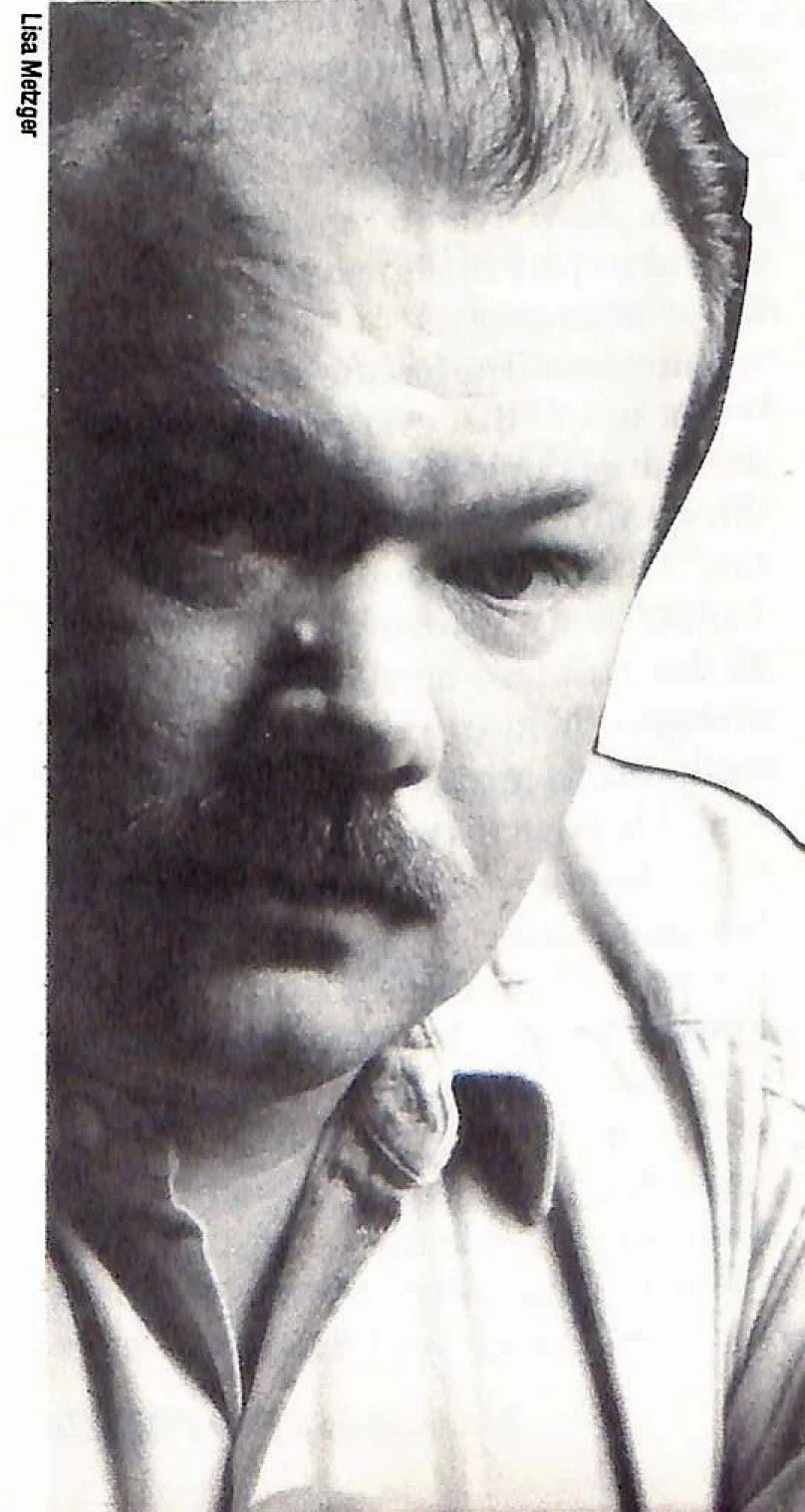
King believes his first big break came when he met disc jockey and record producer Ray Davis at the Delaware Bluegrass Festival. It was the first festival King had ever attended, and he sat around a campsite with Ted Lundy and Jimmy Martin, whom King has always been a great admirer of, due to Martin’s “bluegrass soul.” It was Ray Davis, however, who caught his attention, when as he heard the man speak, King recognized him instantly as the announcer for the Stanley Brothers radio show.
“Jimmy Martin was right in the middle of saying something, and I just cut him off completely, interrupted him, and looked at Ray and said, ‘from Live Oak, Fla., to the Streets of Baltimore...,’” repeating a line so well known to Stanley Brothers’ fans everywhere.
King and Davis became friends as a result of that meeting, and as Davis was a close friend of the Stanleys, he arranged for King to record with Ralph, “my idol,” as King describes him.
Though King emulated Shuffler’s crosspicking style, he learned to pick it skillfully by cornering a fellow named Rush Edwards of Carroll, Va., and “worrying him to death about every night for a year” until he taught him Shuffler’s crosspicking style. He said that if Rush and his brother, Jimmy, had not been so bashful they might have become superstars, they were of such exceptional musical talent. “It’s amazing the hidden talent out there nobody will ever know about,” King said in regard to the Edwards Brothers, and he recalled that Otis Edwards turned down a job with Charlie Monroe and did not even know who Charlie was until he saw him playing somewhere else later on. James laughed when he said Otis was offered $75.00 a week and turned it down because he was “scared to take it.”
King credits the Lundy Brothers, Bobby and T. J., and their band hailing from Wilmington, Del., as being a primary influence in his present musical ability. “They helped me progress the way I did,” King explained, stating that the Lundys taught him timing, drive, and “how it’s supposed to go,” when he worked with them, the first band he ever was a part of. King said “...you can take a guy with ability and he’ll progress, but put him with somebody three or four times better than he is, and he’ll get as good as they are. The Lundys saw I had talent, and they went out of their way to help me.”
King has three children, Steven Ray Lester and James Carter King, of whom he jokingly asks, “...reckon where that middle name came from?,” and an infant daughter Shelby Ann. “I’m trying to form a family band right quick,” he joked. His wife, Renee, plays bass and sings tenor and traveled with King’s band until right before their daughter was born. Replacing her is Jason Moore, a 20-year-old formerly with New Classic Grass. Another member is Eugene Crabtree, from Glouster, Va., who plays banjo and sings tenor, and James describes him as similar to Richard Underwood, recently of the Johnson Mountain Boys, in playing style, and that his tenor singing is reminiscent of Dudley Connell’s, whom King describes as “the greatest bluegrass singer of this decade.” Vernon Hughes, formerly of the Appalachian Express and the Heights Of Grass, plays mandolin and sings baritone, lead and some tenor with King, and has recorded over ten albums in his bluegrass career. He said he enjoys playing bluegrass with the James King band, especially since King is such a “real great vocalist,” and that it’s nice making a living doing something he dearly loves to do.
King’s former fiddle player was his best friend, Wade Jones, who was, much to King’s regret, killed in a trailer fire in 1992. “He was a good friend. We liked the same type of music, the same style...we would sit and listen to music together for hours. There was just a bond between us musically, and he played in the band for four years. I believe it’s the saddest thing that ever happened to me, losing him.”
King stated that it is his professional goal as a bluegrass musician to “play bluegrass all over the world, to be a permanent figure in the business, to have my own style recognized nationally, and to play bluegrass the rest of my life professionally.”
James stated he has the best fans in the business, and that everywhere he plays, there are people who approach him. “I can go anywhere and somebody knows me,” He laughed good naturedly. “And I appreciate it. Fans are what make you in this business, and I could never be arrogant. You can catch me in a jam session with anybody anywhere I go.” He added that his fans are generally the type who enjoy “older, more traditional bluegrass music.”
King believes there is a place in bluegrass for both traditional and contemporary music styles and enthusiasts. “I would like it to stay half and half, that way everybody would be happy,” he said. “I believe there’s room enough in the field for any style of bluegrass, and the IBMA is giving bluegrass a huge audience, they are helping bluegrass tremendously.”
Contemporary bluegrass musicians which draw King’s admiration most for their singing are the Johnson Mountain Boys, with of course, Dudley Connell the highly favored singer, Pat Enright, Alan O’Bryant, Del McCoury and Ronnie McCoury, “...who is quite a singer in his own right, as well as being the mandolin player of the universe,” King laughed. Traditional Grass is another of King’s most favorite bands, and he describes them as being, “...just flat out absolutely fantastic. I love their band, their singing, the drive, the harmony...”
It is the pioneers, however, that King is most admiring of, and influenced by, such as Carter Stanley, and Roy Lee Centers, whom King describes as “closer to Carter than any of Ralph’s lead singers since Carter,” and greats such as Red Allen, Lester Flatt, and Hylo Brown.
King stated that the most humorous incident that he has ever experienced in his bluegrass career was the night he walked out on stage in Brookville Ind., immediately dropped his guitar pick, bent over to pick it up, and “...blew out the whole seat of my pants and had to then play the whole rest of the set wondering how I was going to get back to the van with the entire hind end of my pants ripped out.”
Though King has played and recorded with some “heavy hitters,” he stated that another major highlight of his career was this interview. “I must be doing something right...” He stated sincerely. “This is my first major magazine article, ever.” King was hailed by the Washington Post recently, however, as being one of the top five new artists of 1993 in bluegrass, and was described as being a “thrilling singer.”
James King must surely indeed, be doing something right, as it seems the bluegrass public is giving an eager reception to the new old songs he most loves to play and sing.
Janice Brown McDonald is from one of Florida's oldest bluegrass families. An award winning writer and fiction novelist, she enjoys writing about a good bluegrass jam as much as she enjoys being in one.