
By David Haney
Reprinted from Bluegrass Unlimited Magazine
April 1988, Volume 22, Number 10
Hillbilly at Harvard
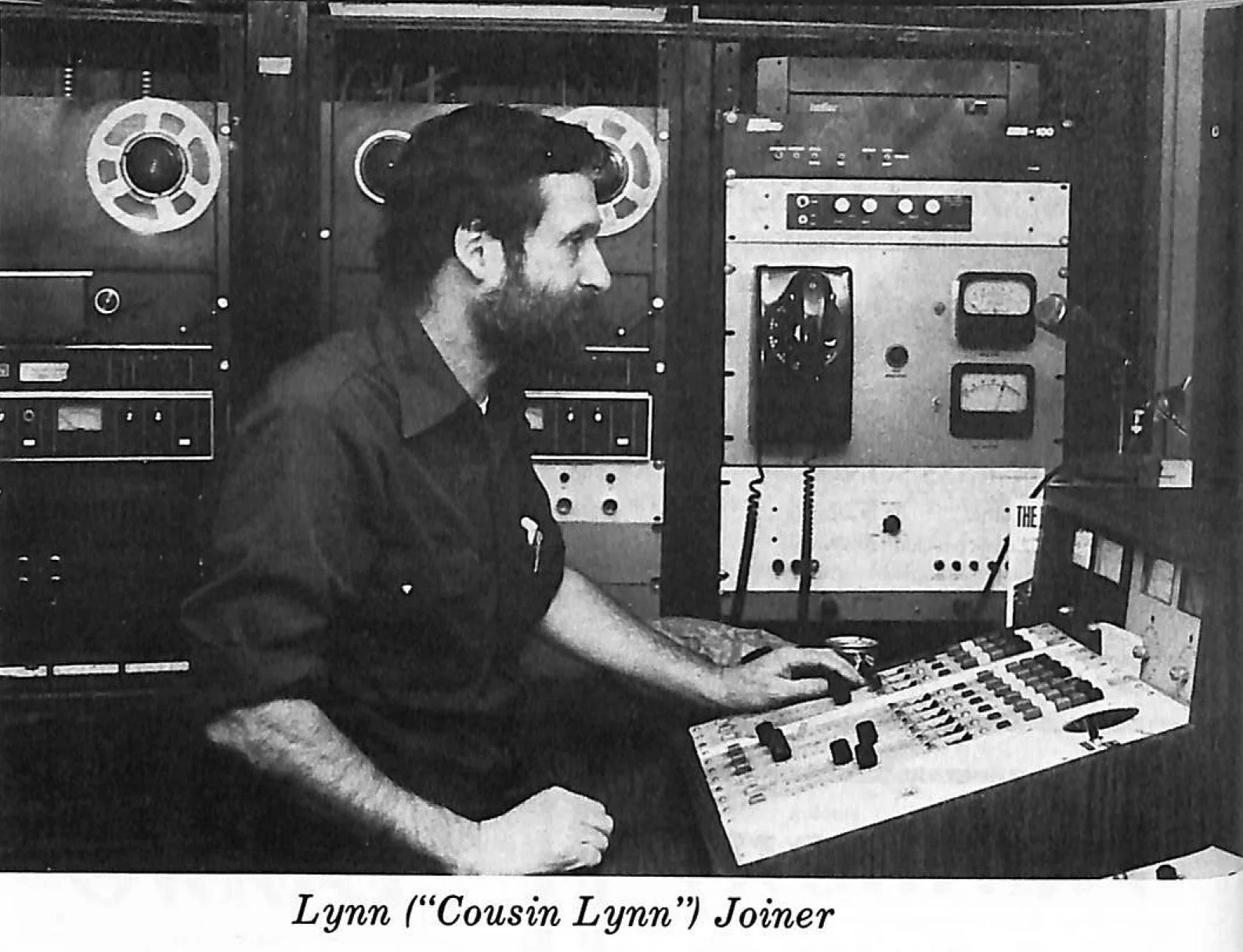
“This is hillbilly radio for eastern New England.” Every Saturday morning those words bring 3 hours of bluegrass, old-time, hard country, and Cajun music to loyal fans in the Boston, Massachusetts, area, and as far away as southern New Hampshire. Closeted in a stuffy studio beneath the Victorian extravagance of Harvard University’s Sanders Theatre, Lynn Joiner and Brian Sinclair (“Cousin Lynn” and “Cousin Sine”) host WHRB-FM’s Hillbilly At Harvard at 95.3. Between the opening notes of “Foggy Mountain Special” at 10:00 and the final strains of “Randy Lynn Rag” at 1:00, Sine and Lynn play an unpredictable variety of country music interspersed with jokes, editorial comments, contests, “The Hillbilly News At Noon,” live interviews, personal appearance schedules, and occasional live bands.
The show is older than many of its listeners. By Harvard standards this is not such a big deal; the university recently ferried Prince Charles over to celebrate its 350th anniversary. However, in the rapid evolution of bluegrass music, this program’s 39 year run commands some respect.
In 1948, the 6.1. Bill offered a college education to many who would have foregone higher education in other times. Through their own heritage or through the musical tastes of those with whom they served, many of the veterans who ended up at Harvard were familiar with the music of Bill Monroe, Flatt and Scruggs, the Stanley Brothers, Hank Williams, Roy Acuff, and others. They were treated to Pappy Ben Minnick’s Barn Howl on the closed-circuit radio that modulated over the AC current in Harvard dormitories. Pappy, who migrated from Minnesota, where he had owned Twinco Records, still does occasional guest spots on Hillbilly At Harvard, spinning country classics from the ‘40s and ‘50s.
WHRB became an FM station in 1957, and in 1959 Lynn Joiner joined the staff hosting folk music shows with names like Balladeers and Folkways. His Old Timey Music Time occupied the spot immediately preceding what was already called Hillbilly At Harvard, which was hosted by another Harvard undergraduate, Ken Gilchrist. Ken was succeeded by “Uncle” Ed Simpson, who borrowed records from his roommate Sine, whom’ he had known since high school.
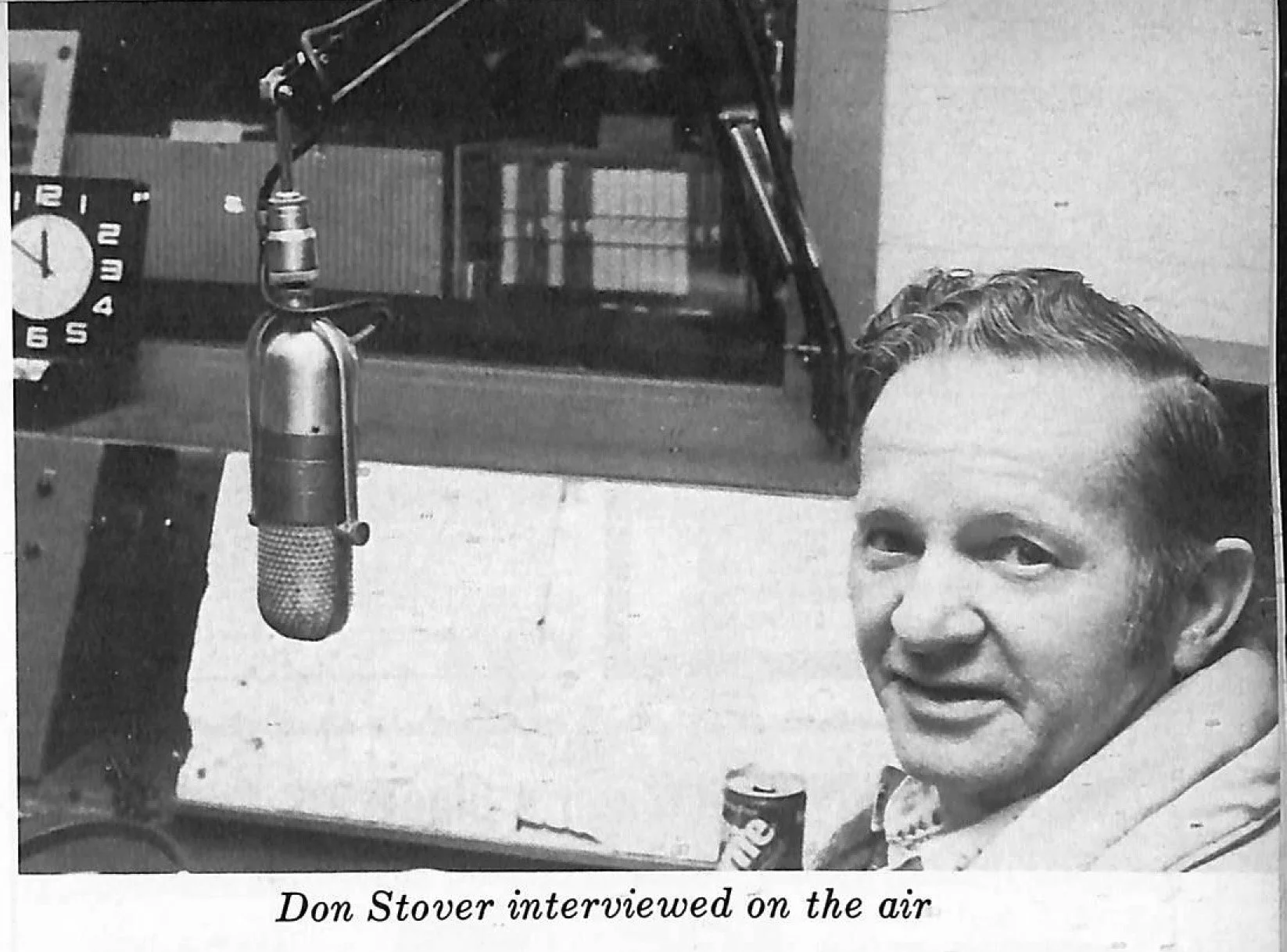
At that time Hillbilly At Harvard was primarily a country show, with an occasional cut by Flatt and Scruggs. Around 1961, Lynn Joiner and Mike Eisenstadt began a bluegrass and old-time music show called Saturday Morning Jamboree. In addition to records, this show featured “live” (taped the night before) segments by the Charles River Valley Boys, the innovative bluegrass and old-time band which included at various stages Joe Val and Tex Logan. This band was, according to Lynn, “crude by modern standards,” but the early ’60s were a time when bluegrass was just beginning to rear its hillbilly head on college campuses, and there were no Rounder or County reissues of classic bluegrass in the Harvard Square record stores, as there are now. Relatively few college students would venture into Boston’s “Combat Zone,” where the Lilly Brothers and Don Stover were playing the real thing at the Hillbilly Ranch 7 nights a week.
WHRB’s loose, eclectic format provided the perfect conditions for the country and bluegrass shows to merge, evolving into the combined bluegrass and country format that Hillbilly At Harvard presents today. This little station also filled a real need for New England country fans in the early sixties. WCOP’s Hayloft Jamboree had died, and Boston had no major country radio outlet. Hillbilly At Harvard thus became much more than a college show; it was the only program on the Harvard station that would get calls from very non-Harvard parts of the area such as the working-class suburb of Chelsea.
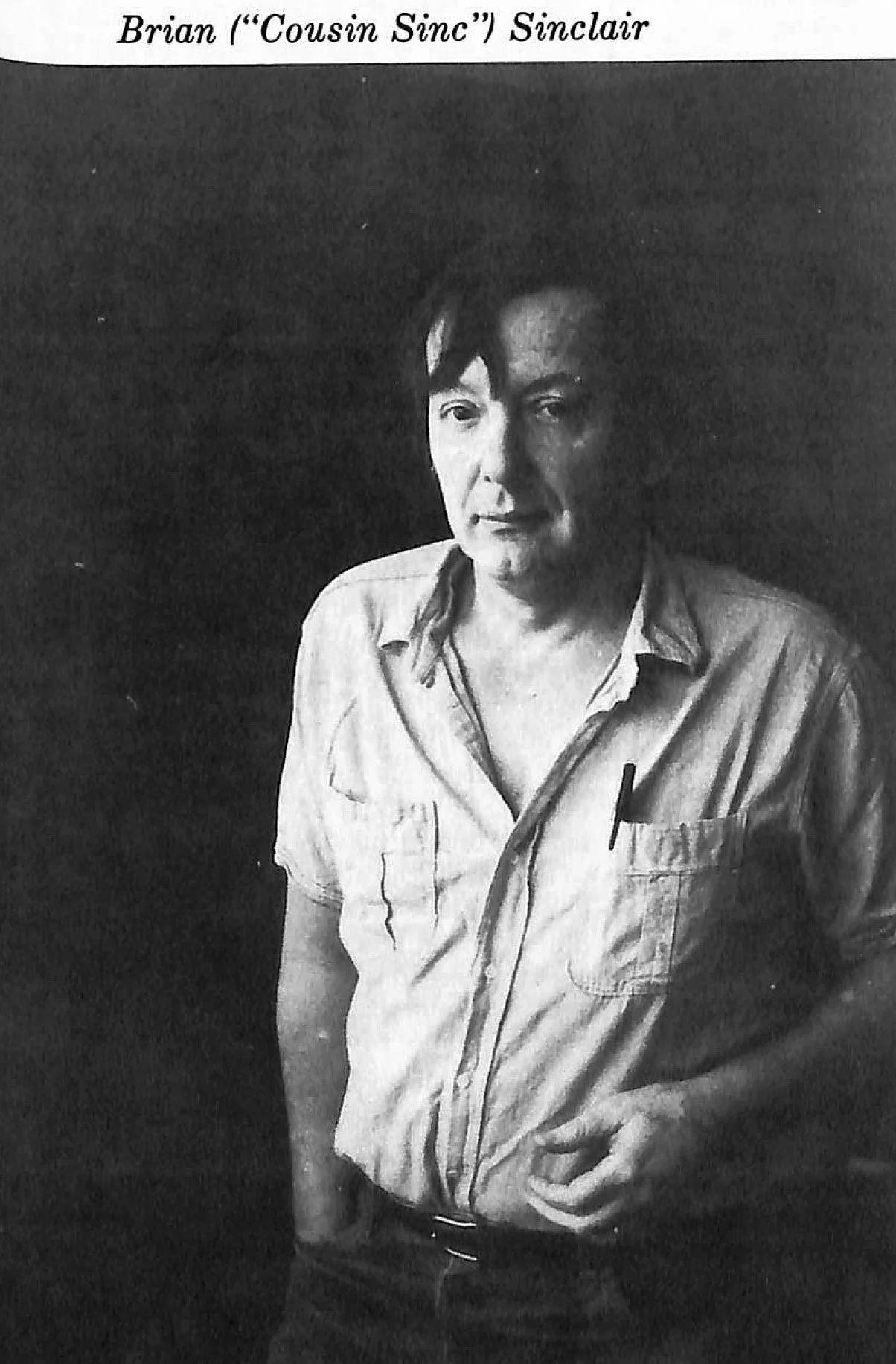
In 1962, Sine and Lynn went to the University of North Carolina for graduate school, and the Harvard show was taken over by Mike Eisenstadt and Fritz Mullhauser. Sine went to study linguistics and Lynn to study anthropology. Lynn explains their acceptance into these programs by saying “the Harvard degree carries more weight the further you go from Harvard.” They both continued to work on their hillbilly music credentials as well as their academic degrees. Lynn had gone to Galax and other points in the South collecting old-time music in 1959, visiting legends such as Wade Ward, Charlie Higgins and Norman Edmunds. Now he was rooming with Sine, who had become involved in recording and collecting projects that ultimately resulted in 2 albums (on Prestige and Folkways) of old-time fiddle music from the Union Grove fiddlers’ convention.
These roommates arrived at their long-standing love for hillbilly music from opposite directions. The difference in their backgrounds is not obvious to the listeners of their show, or even their conversations, but it probably does give a balance and a range to the music they present every Saturday. Lynn was weaned on classical music, and came to country and bluegrass via folk singers such as Burl Ives and Pete Seeger. Through the Charles River Valley Boys, he became an aficionado of old-time music, hungrily listening to tapes of old 78s that were circulated among collectors. Sine grew up in Maine, long a haven for country music, and he remembers listening to Hank Williams on the jukebox and to older cousins playing live. He listened to rock ’n’ roll in the fifties when he attended high school in Quincy, Massachusetts, but he would also drive out of town at night to a hill high enough for him to receive the WWVA signal from Wheeling, West Virginia. On a good night he could even pick up the Grand Ole Opry on WSM. He would sometimes venture into Boston and hang around the doorway of the Hillbilly Ranch (home to the Lilly Brothers and many touring country acts) until he was thrown out. By the time he reached Harvard, Sine had accumulated a fair number of records and was able to round out the WHRB collection, which consisted mostly of older 78s.
Despite the presence of a Harvard graduate, the linguistics program at the University of North Carolina folded, sending Sine and Lynn back to Boston in 1964, without their degrees. They had planned to go to Paris, but instead spent the summer in Harvard Square looking for work. They would read want ads until about 4:00, then argue about where to go for dinner, then return to their apartment and play music—not well, according to Sine. Lynn played fiddle, Sine played guitar, and Byron Marshall played banjo. “It put a real structure on our drinking, which was what we were looking for.” They were finally employed as coding clerks for a sociology project.
In the summer of 1966, during a Thursday night poker game at Dave Schmalz’s house, a Harvard undergraduate and WHRB staffer named Dave Leslie mentioned that Hillbilly At Harvard needed staff. No undergraduates were available or interested, so Sine and Lynn agreed to do it, and Sine, at least, has been involved steadily ever since. The poker game actually produced a committee of 5 who ran the show (sometimes all at once): Sine, Lynn, Dave Schmalz, Byron Marshall, and Ed Simpson. Lynn left in 1967 for an anthropological trip to Nepal, after which he lived in Cambridge, then Providence. Dave, Marshall and Sine hosted the show until Dave went to Holland in 1973, when Sine talked Lynn, who had returned to Boston, into rejoining the Hillbilly staff. Except for most summers when WHRB goes off the air, and the occasional vacation for either host, Sine and Lynn have filled the Hillbilly airwaves every Saturday since then. For the last few years, Lynn has also hosted 2 hours of bluegrass and old-time music on the Down Home Show immediately preceding Hillbilly At Harvard.
Because Lynn Joiner spends his work week directing a prestigious classical music label (Northwestern Records), and his weekends at Harvard, one might fear that he, like some college DJs, would broadcast with the soft-spoken pretension of the classical music archivist. Fortunately, however, Hillbilly At Harvard is a lot more fun. Sine and Lynn combine knowledge and taste with a stab at commercial professionalism that doesn’t take itself too seriously. As Sine points out, amateur status has its rewards: “If we had to do this for money, we’d have to worry more about what we did.” Lynn developed his country DJ chops at WDLW, a Boston-area country station, and he and Sine went to the DJ convention in Nashville partly to observe the record-spinning technique of pros such as Ralph Emery. Lynn points out that “although we’re an FM station, a college station, we do a very fast-paced, AM-format style show. We talk over intros, we break after every record (now and then a segue or 2 an hour); every time you hear a song, you know what it is before the song, you know what it is after the song; you don’t have to wait 5 cuts to find what you heard half an hour ago.”
Listeners have called to complain that their efforts to tape the songs are hampered by the fact that the hosts talk during the first few seconds of most songs; Lynn and Sine are quick to point out that fans should be buying, not taping those records, preferably at the artists’ shows. Hillbilly At Harvard wants to educate its listeners about the music and at the same time support those who play it. According to Sine, “We’re not looking to be scholarly, but we’re looking to inform people about what the business is about, how it works, why it’s important to go out and see the music. We support the record labels; we wouldn’t play a bootleg album that we knew was bootleg, because you’re costing the artist money.”
The Hillbilly hosts also insist on seeing country music as a continuous, connected history. They will often follow an old-time song with a modern country song, and throw in a liberal sampling of bluegrass and Cajun. To those who hear the Carter Family and Rosanne Cash as separate species, Sine says, “We can hear the connection. If you can’t, you may be listening to the wrong station.” Their combination of bluegrass and country reminds us of the time before promoters, fans, and radio programmers invented the hard and fast distinction between those genres. The Hillbilly At Harvard secret formula usually involves 2 country records to every bluegrass, Cajun, or old- time record. According to Lynn, “There’s 2 things that have kept everybody listening: there’s the country format we play, which is country music from 50 years, from Charlie Poole and the Delmores up to nineteen-eighties hits. But we also play enough bluegrass to keep the bluegrass people interested.”
They used to get together every Friday night to program the next day’s show, but now Sine and Lynn program “on the fly.” They have 2 criteria, says Lynn: "One, it’s gotta be good, and two, it’s gotta be country.” Most country programmers are striving so hard for the mass market that they are afraid to make artistic judgements, but Sine and Lynn freely make judgements both before and after they get on the air. “We listen to an album, or a single as they come in. We rate them. A check means it’s airable. Chances of a checked album getting aired are kind of marginal. Check-plus means it’s airable with some enthusiasm. You have additional checks and plusses. Or you can put check- minuses which means it will never be aired—only under duress. If you have 16 requests, and the author of the song there, you might put it on. Then we have the X —that means no way; we aren’t going to play that, period.” An “X’d” record is not necessarily bad; it might simply not be country. Sine claims to have a class called “X-plus,” which means “I really like this, but I don’t think it’s right for the show. It’s not country.”
Sine and Lynn recall with some amusement that the debate between country and pop, or traditional and crossover, has gone on for decades, and they are confident enough in their assessment of what is “country” to avoid pigeonholing artists and albums. For example, they will accept even the lushest string arrangement on a George Jones album. According to Sine, “George Jones is the only person who seems able to completely overcome whatever awful arrangement they give him.” Experimental bluegrass that stays in touch with its country roots will get airplay on Hillbilly At Harvard; the Country Gentlemen’s explorations during the 1970s fall into this category. A Seldom Scene album will rate a mixture of checks and X’s: “‘After Midnight’ gets X’d,” according to Lynn. “First of all it’s a lousy cut and second of all it’s not country—disqualified on two counts.” They try to make a distinction between, on the one hand, experimenting legitimately, and on the other hand, simply importing another genre into bluegrass and forcing it to fit the format. As Lynn says, “If a bluegrass group does a rap record, it’s not something we’re gonna play.” But, according to Sine, “If somebody wants to try something that hasn’t been done, we’re certainly willing to give it a listen. Even if we don’t like it, but we think it’s something the audience should hear, we’ll play it —and say we don’t like it.” Their high standards and strong personal preferences do not restrict them to obscure, idiosyncratic selections, however. Sine knows that the classics help sell the show in the right way. “You have to play a certain amount of classics to maintain the audience. A certain amount of people will tune in just to hear the obscure stuff, but the fact is you’re going to lose a lot of people who want to hear their favorites. You can’t go a half hour without playing something recognizable without losing an incredible number of people. And we want those people.” Sine and Lynn feel that by playing recognizable material that is also high-quality they can keep and educate this audience without lowering their standards: “We are educating some people, but without sugar-coating the pill. We’re not sugar-coating the pill playing [George Jones’] ‘The Race Is On’—that’s a great record.”
They also try to present those efforts of the music industry that go under- recognized, such as album cuts that deserved but never received much airplay, and songs performed by their authors. Writers’ credits are mentioned whenever possible; Sine points out that “they don’t get the recognition they deserve. They’re really central to the industry.”
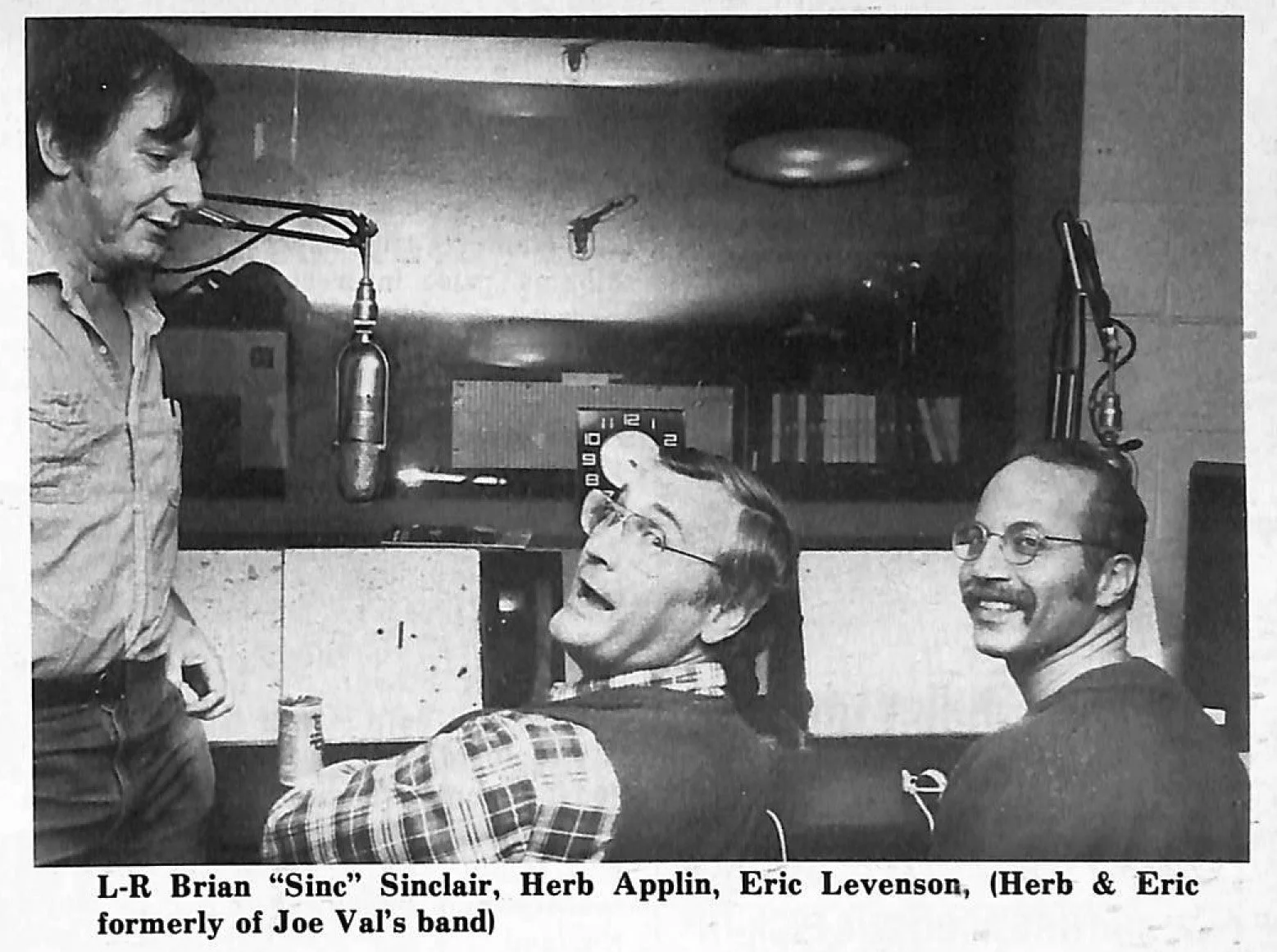
Some of the most active participants in this show are the local musicians. There usually comes a point during the Saturday morning ritual when Sine or Lynn announces that “the hillbillies are beginning to gather.” A motley assortment of New England country and bluegrass musicians wander in and out of the cramped studios to promote recent albums, raise interest in upcoming appearances, and sometimes just to visit. As Sine says, “We don’t know, when we answer the door, who’s there—it could be some sports type getting ready for the football game [Harvard Football follows the Hillbilly show], or it could be John Lincoln Wright or Northern Lights.” One day in 1985, not too long after local bluegrass legend Joe Val had passed away, a group gathered that included Don Stover, the Lilly Brothers, and most of Val’s former bandmembers. A couple of unforgettable hours were spent not only reminiscing about Joe Val, but also telling stories about Joe Val, but also telling stories about 40 years of country and bluegrass music in New England.
Sine and Lynn go out of their way to play records by local artists, and to encourage the radio audience to get out to the clubs and concerts. They will debut albums and play works in progress, helping the audience understand the long process that musicians undergo in order to make themselves heard.
In their effort to promote bluegrass and country as live entertainment, Sine and Lynn not only announce bluegrass and country artists’ personal appearances, but also invite both local and touring bands to perform on Hillbilly At Harvard “from sumptuously appointed Studio A.” The primitive facilities tend to restrict the bands to unamplified bluegrass groups, but traditional bluegrass bands love the fact that some essential parts of the station’s equipment have not been updated since the fifties. A band can gather around 2 old RCA ribbon microphones and pretend (usually with humbling results) to be the Foggy Mountain Boys broadcasting in 1952. Local bands both amateur and professional are featured regularly, and national artists coming to town often promote their shows and albums by performing on the show. The Johnson Mountain Boys, Hot Rize, Hazel Dickens, and Tony Trischka have all ganged around those old microphones in recent years.
Hillbilly At Harvard has had a direct and lasting effect on the kind of bluegrass and country music performed in the Boston area and beyond. Local bands have learned new songs, or have been reminded of old ones, by listening to the eclectic range of material programmed by Cousin Sine and Cousin Lynn. Ken Irwin of Rounder Records will sometimes call up after hearing them play a cut that might be a good song for a Rounder artist to record. Many of the listeners have extensive record collections, but still tune in both for the unpredictability of the selections and the possibility of hearing something completely new. As soon as (or sometimes before) a new bluegrass or country album hits the stores, Sine and Lynn will play it, discuss it, and pass unequivocal judgement on it. Their listeners may not always agree with them, but several generations of fans are thankful for their presence on the air. When Sine and Lynn were recently pre-empted by an hours-long “orgy” of music by rock star Prince, country and bluegrass fans around New England were reminded that their Saturday morning coffee just does not taste the same without Hillbilly At Harvard.