Clyde Moody—Old-Time, Bluegrass & Country Musician
by Ivan M. Tribe & John W. Morris
Reprinted from Bluegrass Unlimited Magazine
July 1975, Volume 10, Number 1
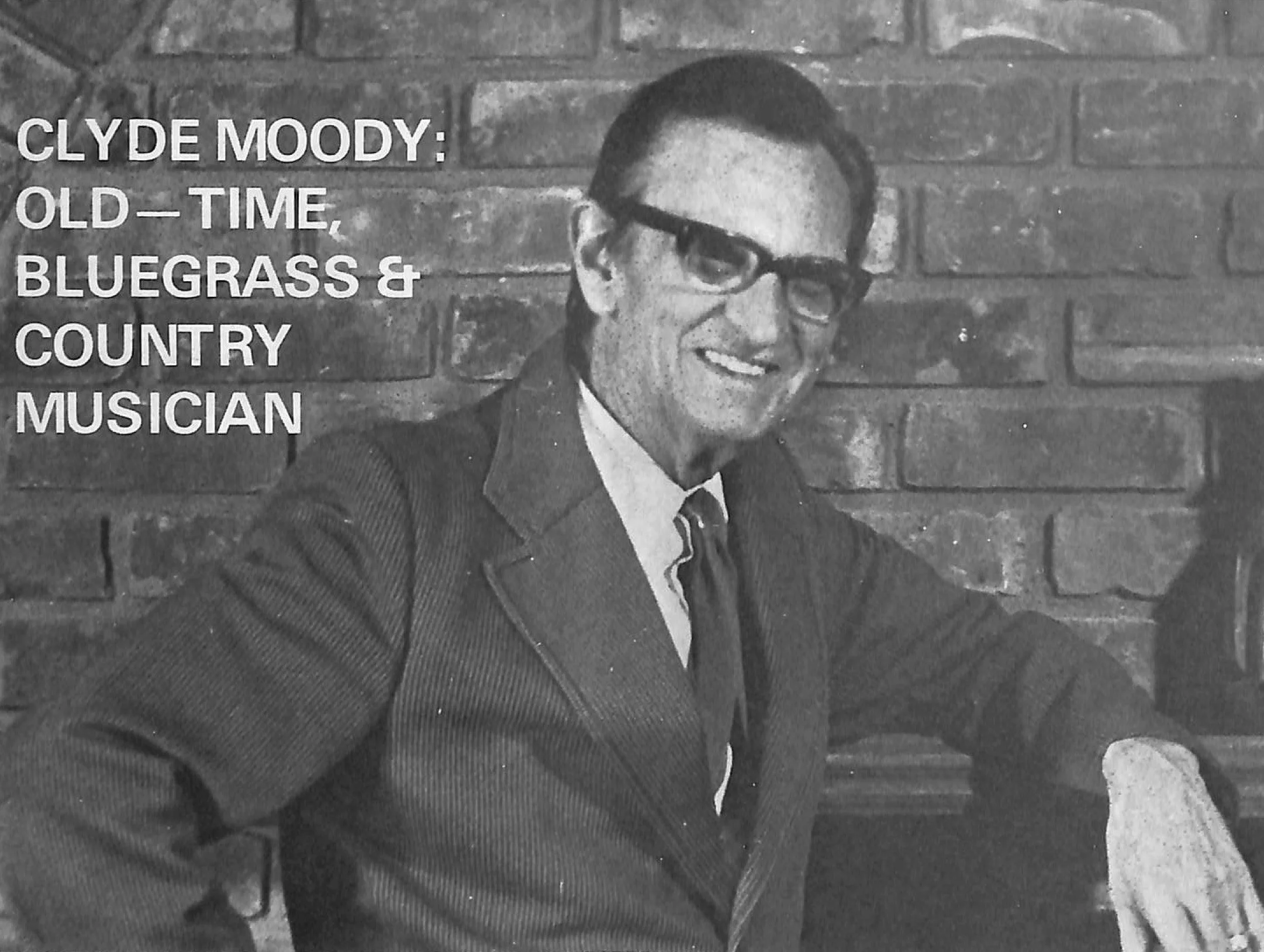
In a period of more than forty years as a professional entertainer, Clyde Leonard Moody has shown himself to be a versatile performer who has significantly contributed to various forms of country music. His professional experience ranges from old-time duets and string bands through bluegrass to pioneering in the sounds of modern country music. Through it all — unlike many performers who seem to be most at home in a single style — Moody has demonstrated an ability to seem quite comfortable in several types of country music. This phenomenon appears all the more remarkable when realizing that Clyde’s individual style has been much the same throughout his career.
Clyde Moody's birth took place at Cherokee, North Carolina on September 19, 1915. His parents, Lynn and Lou Moody who were of Indian and Scotch-Irish descent respectively, reared a family of twelve children with Clyde being the eleventh in line. The elder Moody sang and played the old-time banjo and an elder brother, Fred, played guitar. About 1923, the Moody family moved from Cherokee to Marion, North Carolina. A year or so later Clyde learned to play guitar. Among the friends young Clyde made in Marion were the Hall Brothers, J. Hugh and Roy. Although the Halls sang together, Clyde and J. Hugh also did duet work. Not many years passed before J. Hugh Hall and Clyde Moody became known as Bill and Joe, the Happy-Go- Lucky Boys.
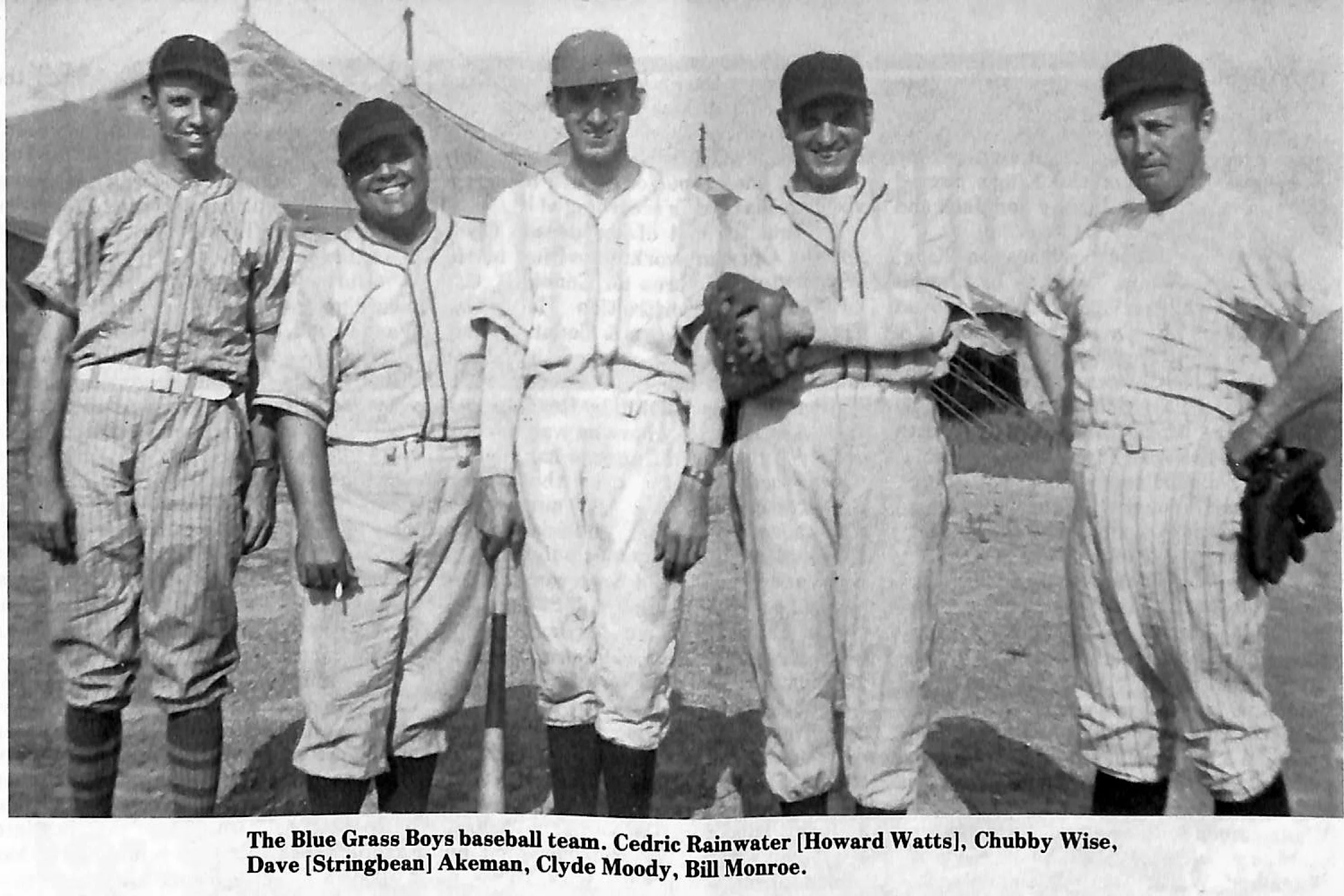
Clyde left home at fourteen, his stern father telling him not to bother to come home as he didn’t believe he could make it on his own as a musician. He went to Spartanburg, South Carolina, hitchhiking the distance of sixty-nine miles. At that time he had never eaten in a restaurant and recalls that he first learned to eat out by ordering what he heard others order. For a while Clyde worked in a logging camp but retained his interest in music. In those early years, Clyde Moody had two loves — baseball and music. As a pitcher, he threw about as hard and fast as anyone but had control troubles. He did try professional baseball for a while with the Asheville Club, but after a good rookie season and a poor sophomore year, he then concentrated on music.
About 1933, Clyde and J. Hugh Hall landed a radio job in Spartanburg, South Carolina doing a half-hour show daily. It required a lot of walking in order to get there and back but they enjoyed the opportunity to entertain. After a while the Happy-Go-Lucky Boys began to get requests for personal appearances and were able to make a living. Since neither drove nor owned a car, they had to depend on a friend who Clyde lived with to get them around for personal appearances until they saved enough to get their own car. Soon they acquired a sponsor, the Blue Front Liquor Stores, who paid them a salary for their radio show. About this time, Clyde recalls doing a recording session for Art Satherly of A.R.C. who happened to be in the area recording. This session, which may have included Clyde’s first recording of “Six White Horses”, remains totally unissued.
In the fall of 1937, Wade Mainer, who had become one of the most famous radio and recording personalities of the Carolinas, was looking for a singer and guitar player to replace Zeke Morris in a new group he was forming called the Sons of the Mountaineers. Wade apparently had heard Clyde on the radio and inquired about him through Wade’s brother James who lived near Clyde’s family in Marion. Clyde had heard of Wade and knew of his popularity so he jumped at a chance to join him; he also talked Wade into using J. Hugh Hall. They formed a quartet with Steve Ledford from Mitchell County, North Carolina on fiddle, Clyde and J. Hugh on guitar and Wade on banjo which became one of the most successful groups of the late 1930s. They recorded many sides for Bluebird, mostly featuring Clyde as lead vocal. The group’s version of the Bill Cox song, “Sparkling Blue Eyes,” became one of the most popular country songs of 1938.
During the time Clyde was with Wade he also experimented with J. Hugh in different vocal styles. For instance, on the recording of “Mama You’re Awful Mean to Me,” there is a strong Callahan Brothers influence and on the recording, “That Kind,” a strong resemblance to the Delmore Brothers can be noticed. Clyde boasts of J. Hugh’s and his ability to yodel in harmony. It was also at this time that Clyde was able to develop his distinctive two-finger guitar style that has been used in bluegrass by musicians such as Charlie Moore among others.
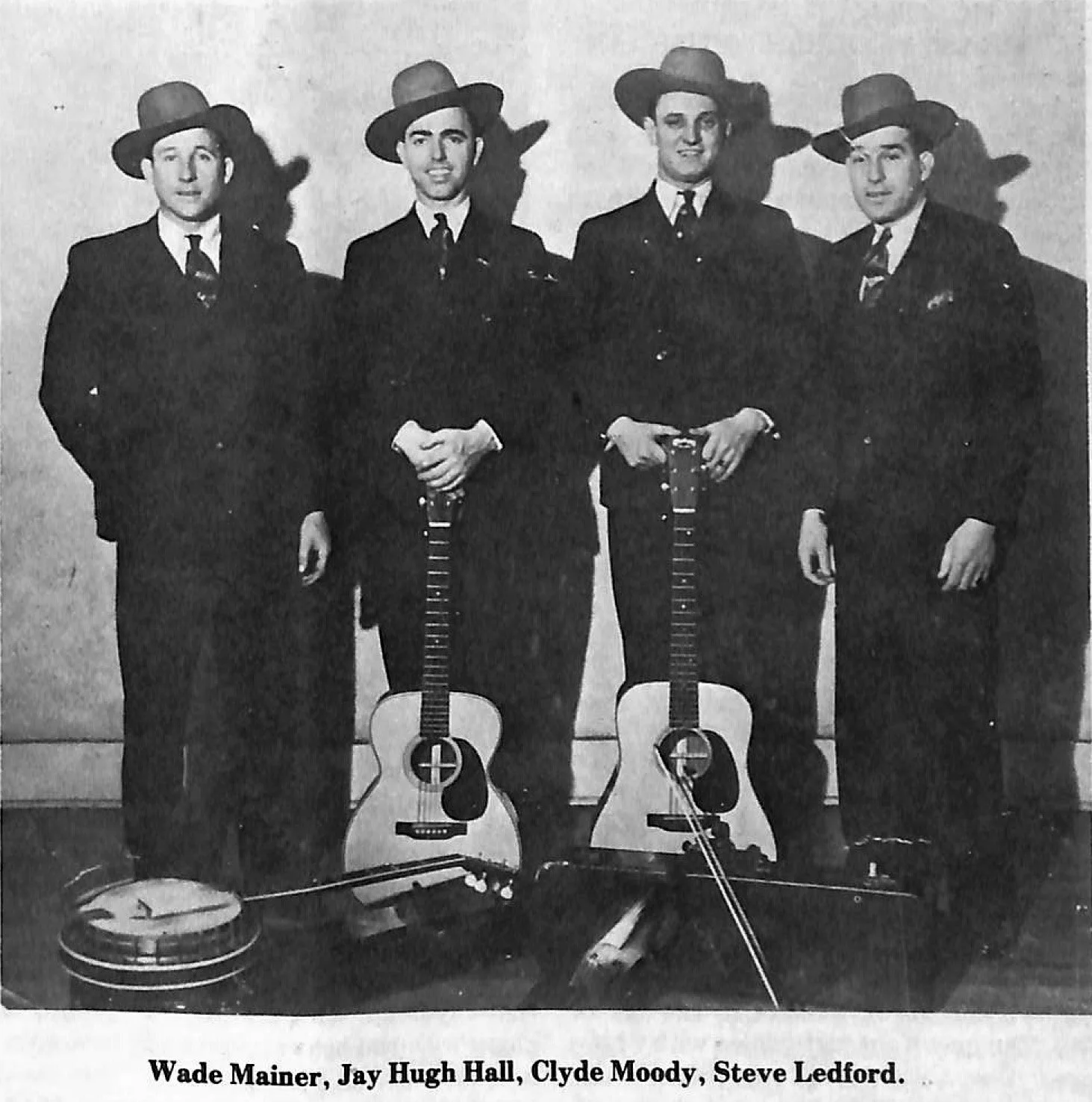
Clyde remained with the Wade Mainer band for two years during which time they did radio work at WLS-Columbia, South Carolina, WWNC-Asheville and WPTF-Raleigh, North Carolina. They split their earnings evenly after expenses and enjoyed a good relationship. The group also experienced excellent radio popularity, especially at Raleigh. In addition to their musical numbers, the group did comedy, some of which included blackface routines.
In addition to his recordings with Wade’s band, Clyde also helped J. E. Mainer do his last session on Bluebird. In February, 1940, the Happy-Go-Lucky Boys, who had continued to work as a duet within the Sons of the Mountaineers, did a session of their own for Bluebird in Atlanta, Georgia. Steve Ledford helped “Bill and Joe” on fiddle and they did six numbers, two of which were instrumentals. The session allegedly was made with only these three musicians because Wade sat it out due to a financial argument with Victor.
Not long after this, the band broke up but Clyde and J. Hugh joined up with J.E. Mainer, going to WAPI in Birmingham, Alabama. Clyde soon fell out with Hall and Mainer and resolved not to work with them again. Returning to North Carolina, he accepted an offer to join Bill Monroe and the Blue Grass Boys on WSM’s Grand Ole Opry.
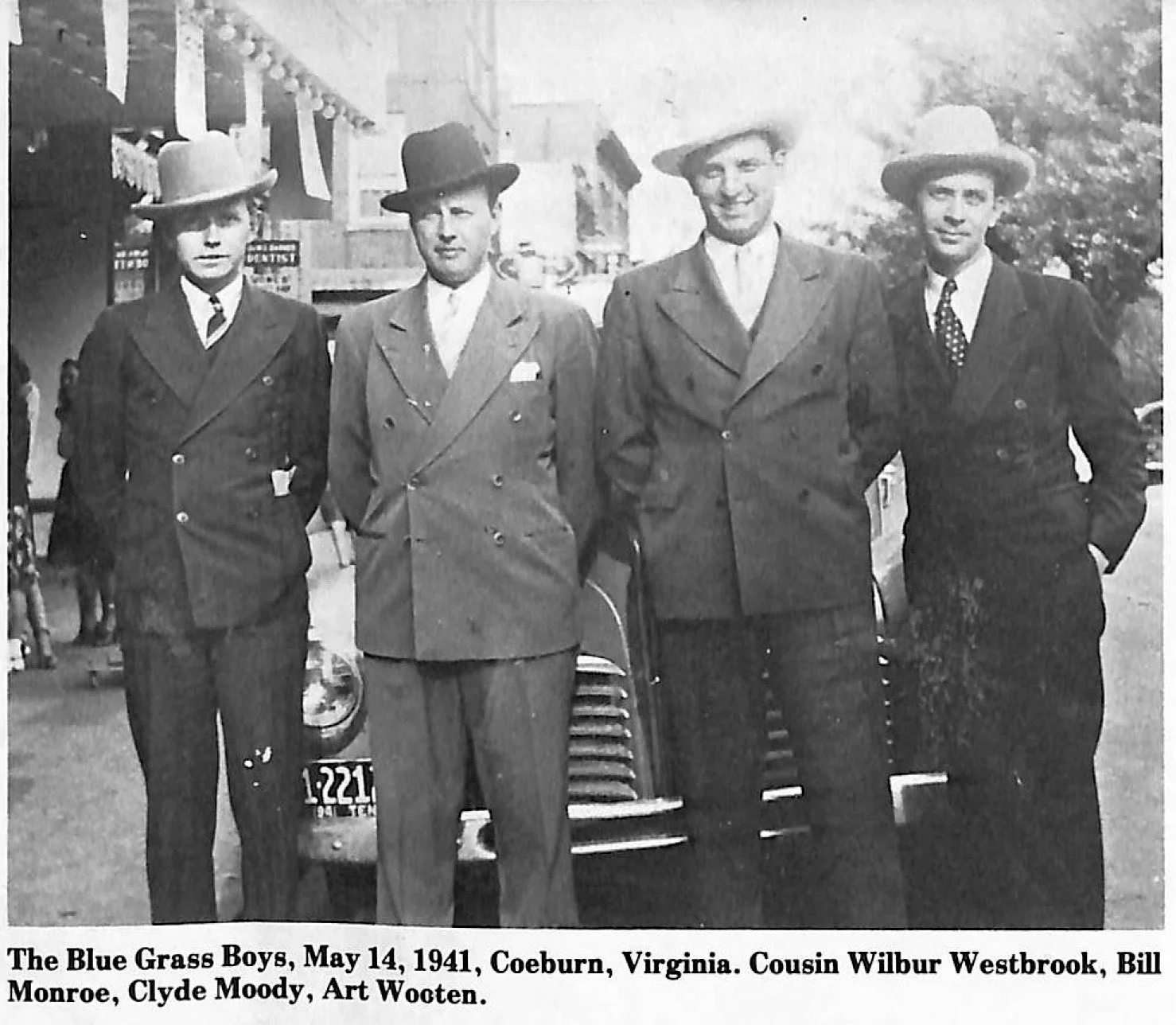
Clyde made arrangements to meet Bill in Bluefield, West Virginia on the night of September 6th, 1940. Bill’s group at that time consisted of Cousin Wilbur Westbrook on bass, Tommy Magness on fiddle and Mack McGar who also worked separately on the Opry playing both fiddle and mandolin. After playing the Friday night show in West Virginia, the Blue Grass Boys took off for Nashville and the Opry, working it too, all before Clyde had the opportunity to rehearse with the group.
After a month with the group, the Blue Grass Boys recorded their first Bluebird session in Atlanta in the fall of 1940. The group cut eight sides with Clyde doing the solo vocal on “Six White Horses,” a number he had written several years earlier. He also did a couple of duets with Bill and sang lead on the gospel quartet number, “Cryin’ Holy Unto the Lord.” Although this was the only session that Clyde did with the Monroe group, it along with the heavy radio and show date schedule made him probably the best-known Blue Grass Boy in the years prior to Flatt and Scruggs’ joining the group. Clyde also helped Arthur Smith cut some fiddle instrumentals by playing rhythm guitar behind him on these same Atlanta sessions.
The four or five years that Clyde spent with Bill Monroe and the Blue Grass Boys turned out to be extremely busy ones. The group spent a great deal of time on the road averaging about 3,000 miles travel per week, doing two or three shows daily much of the time. In the summer months they also had a baseball team on which Clyde served as pitcher. Bill and Clyde enjoyed a good relationship and the lead singer-guitar man sometimes helped in obtaining sidemen. Clyde was instrumental in the hiring of both Carl Story and Chubby Wise as the band’s fiddlers.
For one brief period, Clyde returned to North Carolina and formed a group of his own at WBBB in Burlington. Lester Flatt was part of this band and the two did a lot of duet numbers. However, after about six months, the “Carolina Woodchopper” went back with Bill Monroe and WSM.
By the beginning of 1945, Clyde Moody resolved to try to make it on his own as a solo artist. He went to Harry Stonefmanager of the Grand Ole Opry and obtained a spot for himself on the Opry. Roy Acuff hired Clyde at $200 weekly to be a featured solo artist with his troupe for a few weeks until Clyde could line up some show dates for himself. It was not long until Clyde Moody began to make a name as an individual artist.
In February, 1945, Clyde did his first record session as a solo artist cutting four sides (only two of which were issued) for Art Satherly on Columbia. A little later he did four more numbers for the Bullet label which was one of the earlier Nashville based operations. On the latter recordings he used instrumentation which featured Owen Bradley on piano and a trumpet in addition to more standard country instruments. The music on the records is much like western swing although Clyde’s own style is little changed from those recordings which featured a more Appalachian sound. Songs he waxed on the session included “I’m So Lonesome” and “If I Had My Life to Live Over.”
Perhaps the most important new record company in the 1940’s as far as country music was concerned was Syd Nathan’s King Records of Cincinnati. Nathan built his label into a major concern with a strong line of rhythm and blues, and hillbilly records. Major country artists who joined the King roster early included the Delmore Brothers, the Carlisle Brothers, Grandpa Jones and both J.E. and Wade Mainer. In 1947, Clyde signed with King and soon became one of their major artists. Although none of these recordings are bluegrass, one may nonetheless appreciate the quality of the vocal work and the smooth fiddles of Chubby Wise and Tommy Jackson who worked on many of the sessions. During Clyde’s King days he also worked on some gospel recordings with the Brown’s Ferry Four and as part of the King’s Sacred Quartet (along with Johnny and Jack and Ray Atkins).
The first Moody release on King, “Shenandoah Waltz,” written by himself with an assist from Chubby Wise, proved to be a hit and firmly established him as a recording artist. The song has been widely covered by other artists ranging from Lulubelle and Scotty, Charlie Monroe and Jimmy Martin to Lawrence Welk and Frankie Yankovic. By 1952, it became a million seller. Not surprisingly, it ranks as a bluegrass standard although Clyde’s original rendition of it fits more into the “country crooner” style.
Clyde Moody along with fellow Opry artists Eddy Arnold and Red Foley helped to popularize the crooner style in country music during the mid-forties. Most of the sixty or so sides Clyde cut with King fall into this stylistic category. Today one suspects that artists like he and Red Foley who had a background in more traditional musical forms may have helped to sell this newer sound to hard-core country fans. Clyde gained some fame for his waltz type numbers such as “Cherokee Waltz”, “Carolina Waltz” and “West Virginia Waltz.” For several years, he was known as the “Hillbilly Waltz King.” Other songs have become standard bluegrass fare like “Next Sunday Darlin Is My Birthday” and “I Know What It Means to be Lonesome.” The old Jimmie Davis number, “Where the Old Red River Flows” probably entered the repertoire of bluegrass vocalists via Clyde’s recording of it.
About the end of the decade Clyde left the Opry to work television in the Washington D.C. area for Connie B. Gay including the Constitution Hall “Gay Time” and other “Town & Country Time” shows. Chubby Wise worked there with him. He also worked on several radio stations such as WDBJ in Roanoke and WDVA in Danville where he was the star of the Virginia Barn Dance, a half hour of which was broadcast over the Mutual Broadcasting System. A number of well-known bluegrass musicians also appeared on this show including Bobby Hicks and Hubert Davis who were part of a band known as the Flint Hill Playboys.
In 1951, Clyde cut his last session with King, having been promised an excellent deal by Paul Cohen at Decca. As a result he bought his own contract from Syd Nathan and signed with Decca. Although he had been promised six single releases yearly, he had only five releases in three years with the company and concluded that the company had in-effect put him on the shelf to keep his records from competing with those of certain longer established Decca artists. He then dropped out of country music for several years (roughly 1957-1963). During this time, Clyde made a foray into the mobile home business.
Clyde Moody returned to the record studio in 1962 by doing an album for Don Pierce at Starday Records. He also started becoming more active otherwise working a daily TV show in Raleigh called “Carolina in the Morning.”
During the sixties, he did two more recording sessions — one for Ray Davis at Wango which tradition-oriented fans generally liked and the other on the Little Darlin’ label — neither of which received very good circulation. In the fall of 1971, Clyde left Raleigh and returned to Nashville after a long absence. The following year he cut his first bluegrass album for Old Homestead with the instrumental assistance of the Sunnysiders and also made some guest appearances on Lester Flatt’s radio show and the Opry. Although in ill health in recent years he has continued to work as circumstances permit.
In addition to being a superb vocalist, Clyde Moody’s flat-top guitar work has also been outstanding. His active career as a performer now covers more than forty years, during which time he has influenced and contributed much. And he has done it all with a style that fits into several types of country music. He has helped to bridge old-time with bluegrass and modern country music. Through it all, he has always been an outstanding vocalist, perhaps more so today than ever.